USFWS Habitat Spring 2026 Updates
April community meeting in Emmonak, AK
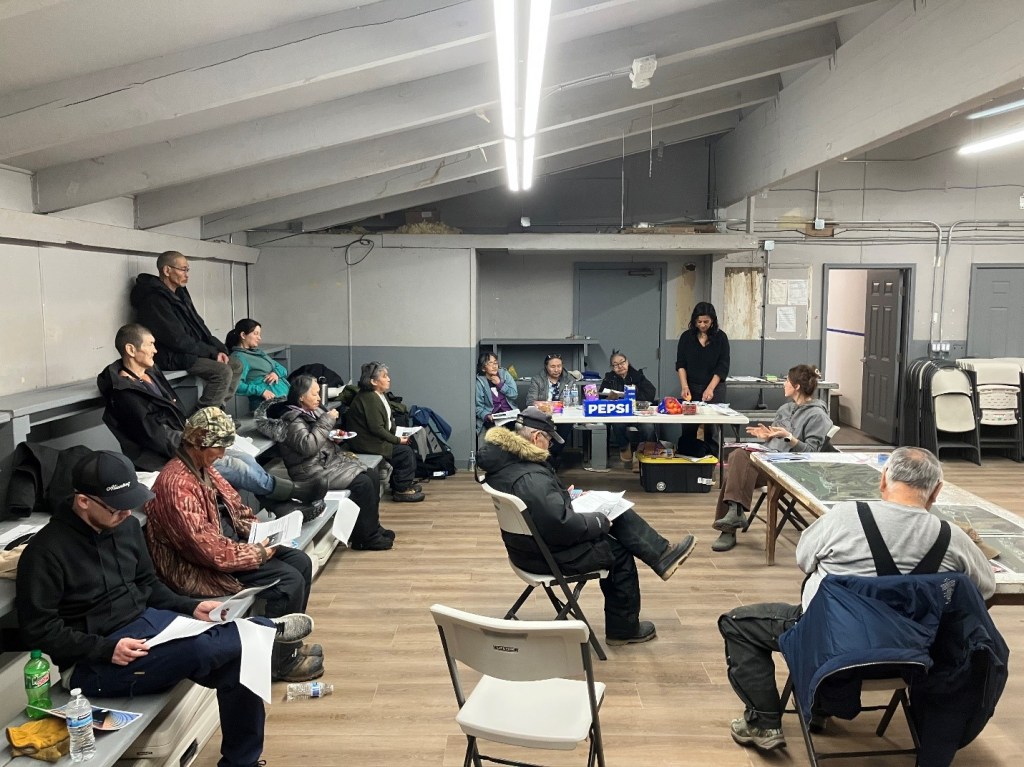
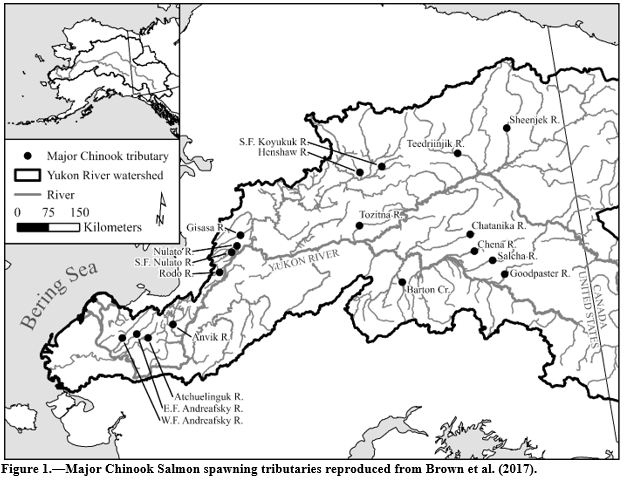
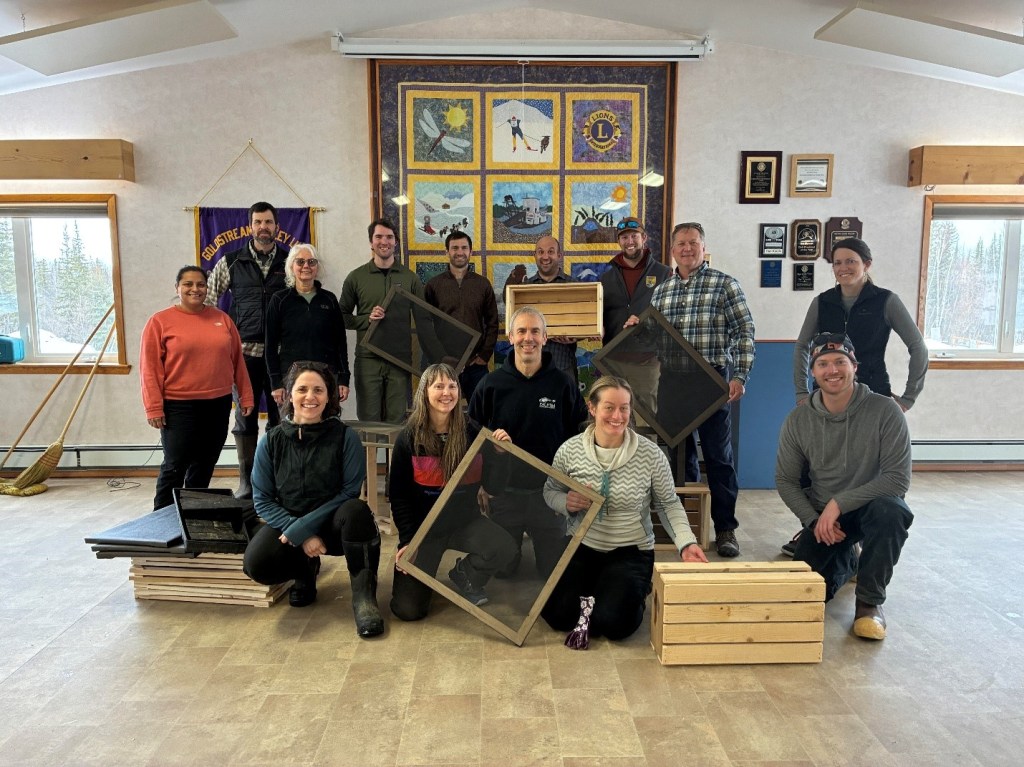
In April, Chandra McGee (USFWS) traveled to the village of Emmonak in the lower Yukon with Aditi Shenoy (Fairbanks Soil and Water Conservation District – FSWCD), Grace Kirkey (Yukon River Drainage Fisheries Association) and Kristen Reece (University of Alaska, Fairbanks) for a community meeting focused on fish habitat concerns. FWS and FSWCD have National Fish Passage Program funding for a project to improve aquatic organism passage in Emmonak Slough. In fall 2025, FWS and FSWCD conducted culver surveys and interviews with local community members. The community meeting brought together a larger audience to discuss concerns and brainstorm solutions. Future activities will include additional culvert surveys, engineering designs, stream clean-up, water quality monitoring and fish assessments.
Expanded Yukon River temperature monitoring
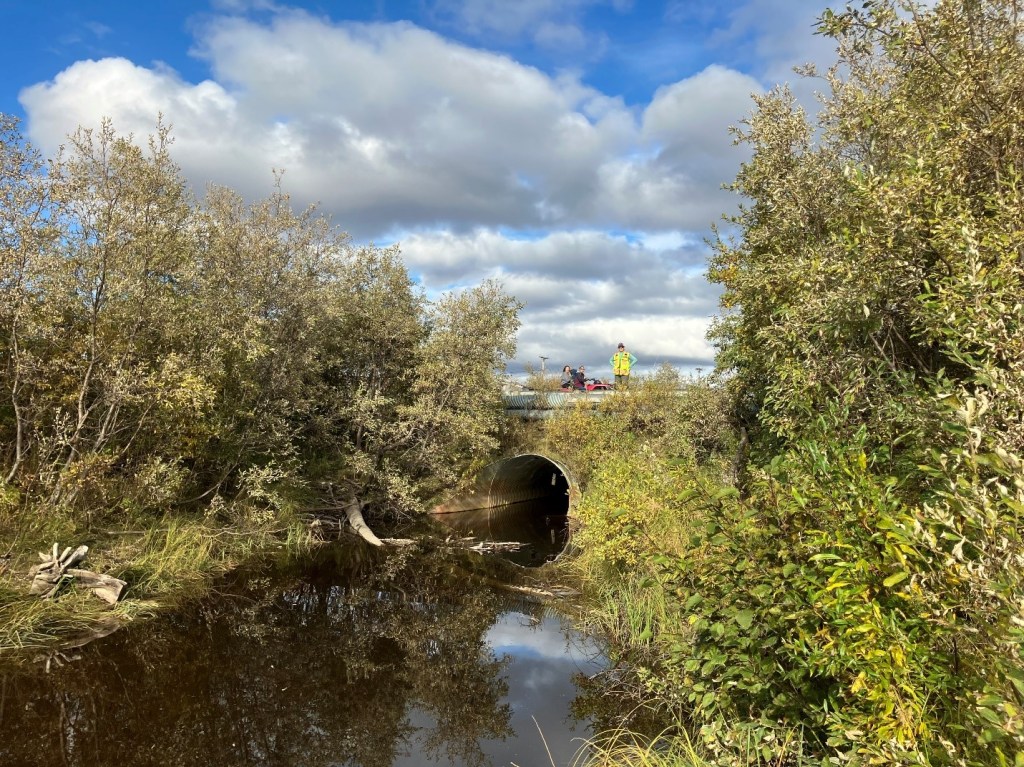
USFWS is working with multiple partners, including the Bureau of Land Management (BLM), Alaska Department of Fish and Game (ADFG), Yukon River Drainage Fisheries Association (YRDFA), and Nulato Village to improve data collection on water temperature and other environmental stressors in Chinook Salmon spawning areas in the Yukon. Site selection is based on historic and continued abundance and a review of tributaries designated major spawning areas in Brown et al. (2017).
Beginning in summer 2026, USFWS and partners plan to deploy loggers and collect continuous temperature data from the West Fork Andreafsky, Anvik, Gisasa, Rodo, South Fork Nulato, Nulato, Henshaw, Chatanika, Goodpaster, Chena, Salcha, Tozitna, South Fork Koyukuk, Teedriinjik and Sheenjik Rivers (see below map). Some rivers are already regularly monitored, while others have been monitored historically or not at all. In addition to supporting long term monitoring, USFWS intends to consolidate data, standardize deployment, data management and use of AKTemp, and provide annual reports on environmental conditions to stakeholders.
Chena and Salcha River streambank physical habitat surveys
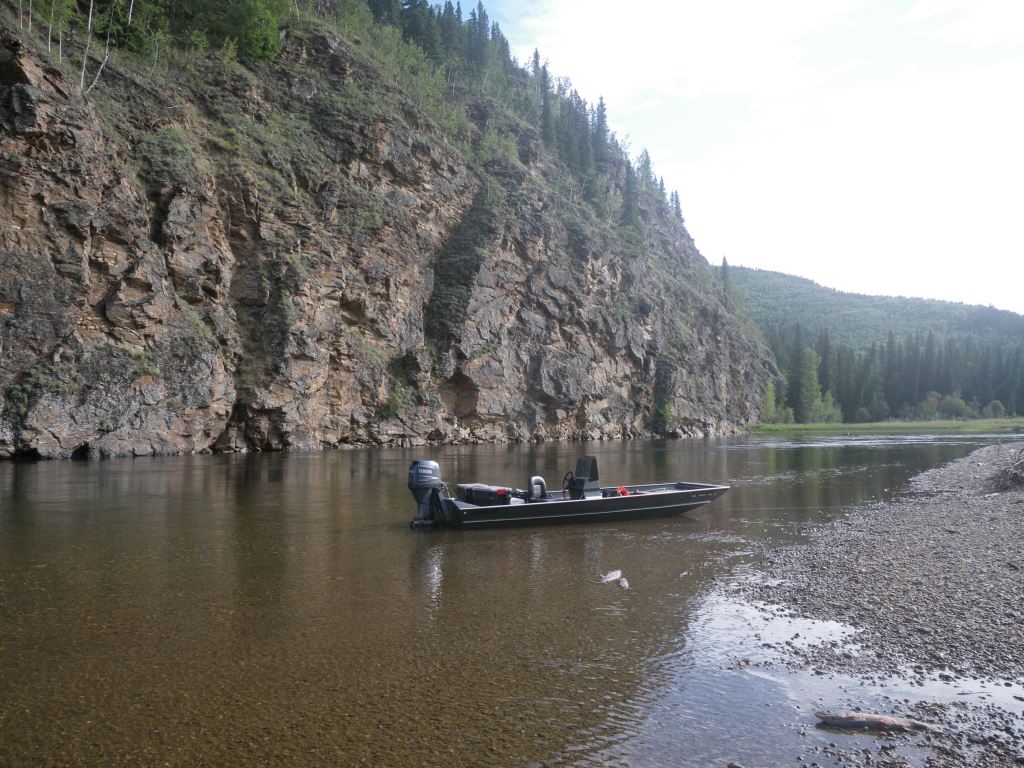
USFWS and the Tanana Valley Watershed Association will continue to inventory high priority reaches and conduct physical habitat surveys of riparian and streambank conditions in the Chena River. In 2026, the effort will expand to include the Salcha River. Teams will collect data on a subset of geomorphic, water quality, and physical habitat indicators outlined in the EPA National Rivers and Streams and/or BLM Aquatic Inventory and Monitoring protocols for boatable rivers.
Native plant nursery
USFWS is partnering with the Fairbanks Soil and Water Conservation District to produce locally adapted native plants for restoration. This project will provide support for FSWCD to:
-Collect native seeds and vegetative cuttings from wild populations following Seeds of Success protocols and propagate plant materials to produce healthy, genetically appropriate stock.
-Establish and maintain the infrastructure required for seed processing, storage, germination, and seedling cultivation.
-Produce and supply regionally adapted native seeds and seedlings to USFWS.
Document and disseminate propagation protocols, data and best practices.
Contact Chandra McGee at chandra_mcgee@fws.gov with any questions about these projects.

