UAF – IARC Spring 2026 Updates
Our goal at the University of Alaska Fairbanks International Arctic Research Center is to document, quantify, and map cumulative effects of climatic, food-web, and habitat stressors limiting recovery of Yukon River salmon populations, with a focus on actions that managers and local communities can take to support salmon recovery. We just started year 2 of our 3-year study, which is led by Erik Schoen at the UAF International Arctic Research Center and funded by the USGS via the Alaska Climate Adaptation Science Center. During project year 1, we consulted with partners and community members, conducted our first field season, and began several laboratory and geospatial analyses. Master’s students Raven Dawson and Kristen Reece conducted habitat surveys, fished for northern pike and other salmon predators, documented juvenile salmon distribution and body size, and sampled environmental DNA near several potential restoration sites, primarily on the Chena and Chatanika rivers near Fairbanks. Here is what they’ve been up to, in their own words:
MS Student Kristen Reece:
Over the past year, Kristen worked in partnership with Yukon River communities and the Yukon River Drainage Fisheries Association (YRDFA) to learn how habitat conditions and predator-prey relationships affect juvenile salmon during their freshwater rearing stage. Many community members have shared observations about changing fish populations, shifts in predator abundance, and the importance of healthy side channels, sloughs, and tributaries where young salmon grow. In response to community-led questions, we have been analyzing sheefish stomach samples from the Village of Grayling to better understand predation, while also learning from Elders and fishers about how past subsistence practices, like harvesting fish for dog teams, may have helped maintain ecological balance. This work is helping identify how habitat quality and restoration efforts, alongside local knowledge, can support stronger rearing conditions for juvenile salmon.
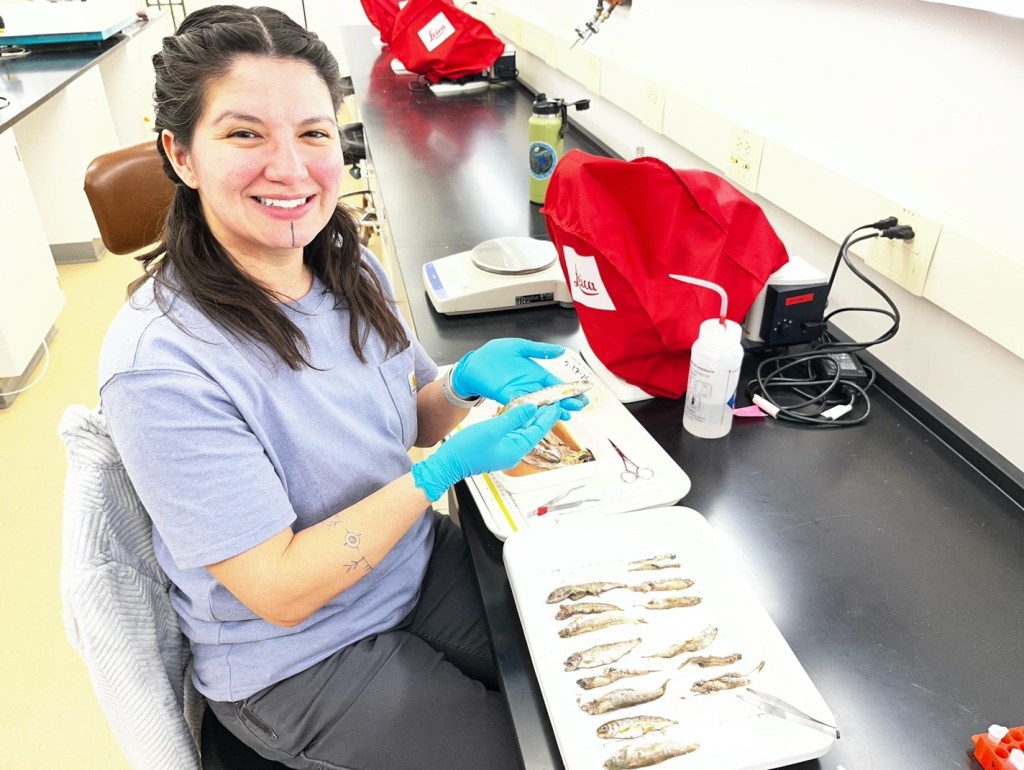
Kristen also had the opportunity to work with participants through the YRDFA Bio-Tech Fisheries Program in July 2025 and looks forward to continuing this collaboration as an instructor at this year’s program in Saint Mary’s, as well as upcoming visits to Emmonak and Kotzebue to learn more from community members. Thank you to everyone who continues to share their knowledge and support this work. You can find out more about Kristen’s research and how to get involved here: https://schoenlab.alaska.edu/community-science
MS Student Raven Dawson:
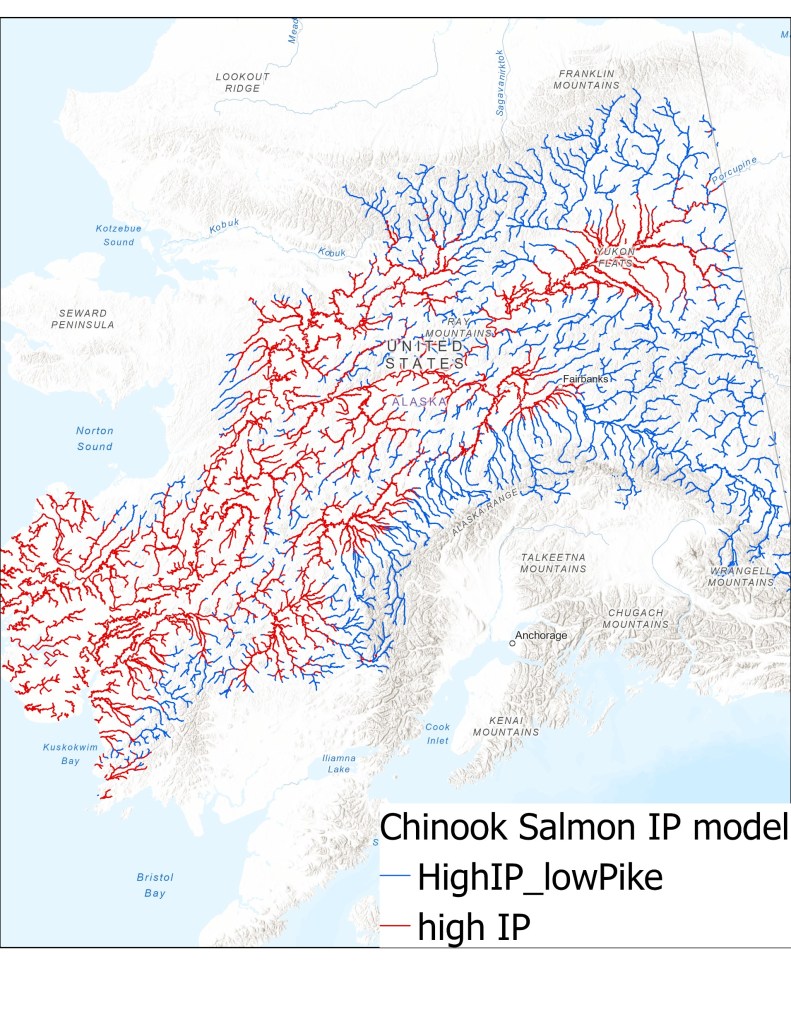
Chinook salmon (King salmon) in the Yukon River have declined in recent years. Habitat restoration is one of the primary strategies used to support salmon recovery, and significant time and resources are being invested across the Pacific Northwest and the Yukon River watershed. However, the tools currently used to guide restoration efforts typically do not consider food-web interactions that can limit salmon distributions. My project aims to improve how restoration sites are selected by developing a decision-support tool that can be used by groups involved in restoration. By integrating data on habitat features, water temperature, and predation risk, this tool will better predict which areas are most likely to support Chinook salmon. We will also test this approach in the field to ensure it performs well under real-world conditions. The ultimate goal of this project is to create a more reliable and easy-to-use tool that helps scientists, managers, and restoration practitioners focus their efforts where they will have the greatest impact on salmon recovery.
Next Steps:
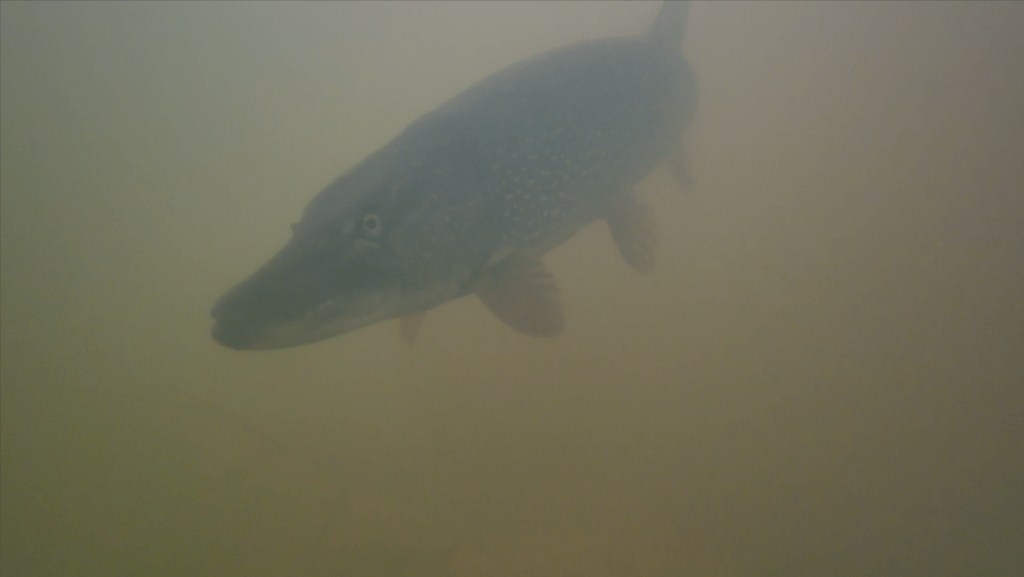
Our UAF-based team, including Erik Schoen, Andrés López, Will Samuel, and Maggie Harings will ramp up field sampling focused on documenting the distribution and abundance of salmon and their predators this summer. The team will focus on areas of highest priority for habitat restoration efforts, including the Chena Hot Springs Road corridor east of Fairbanks. These efforts will benefit from two new, closely aligned projects led by Schoen, López, and ADF&G’s Allison Matter to improve maps and models of salmon habitat in the Tanana Valley, funded by the National Fish and Wildlife Foundation and U.S. Air Force, and in partnership with the Alaska Department of Fish and Game.
If you have any questions about our research, please reach out to us at eschoen@alaska.edu.

