From Gold Rush to Restoration: Monitoring Alaska’s Stream Communities
Thomas F. House, Sarah Nyland, and Dakota Keller with Alaska Rivers Lab at University of Alaska Fairbanks
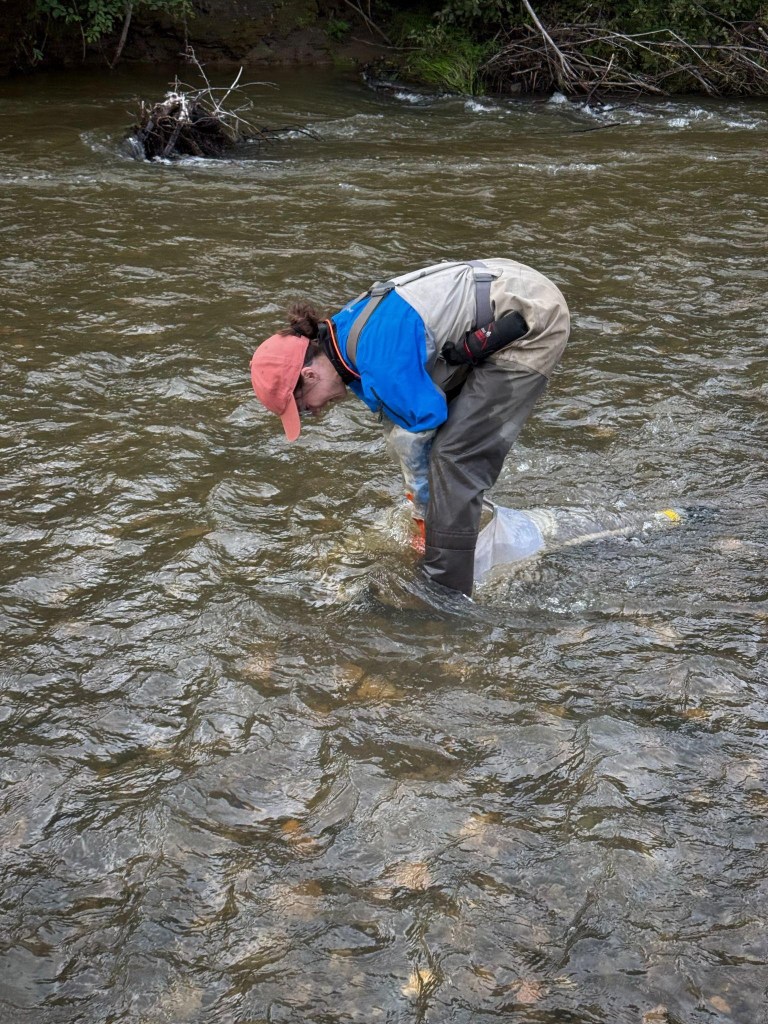
In 2026, students from the Alaska Rivers Lab at the University of Alaska Fairbanks are continuing a diverse set of research projects across the Yukon River drainage, with a shared focus on stream restoration, feeding ecology, and the ecological impacts of historic placer mining. These efforts span multiple Interior Alaska systems and represent a growing collaboration aimed at understanding how altered stream habitats influence aquatic communities and fish populations in the subarctic.
This work is especially timely in Interior Alaska, where more than 200 streams have been impacted by placer mining. These disturbances have reshaped stream channels, reduced habitat complexity, and altered the aquatic food webs that support juvenile salmonids. Despite ongoing restoration efforts, there remains a need to better understand how these changes affect the biological processes that ultimately drive fish growth and survival.
Salmon, particularly Chinook salmon (Oncorhynchus tshawytscha), are central to this work. They are not only ecologically important, linking marine and freshwater ecosystems, but also culturally and nutritionally vital to communities throughout the Yukon River basin. Declines in Chinook populations across the region have heightened the urgency of identifying the factors limiting their recovery, especially during the freshwater rearing stage where habitat and food availability play critical roles. Together, the following projects examine how restoration actions and mining legacies shape stream ecosystems, with an emphasis on macroinvertebrate communities and the energetic pathways that support fish growth. By integrating field sampling, long-term monitoring, and emerging approaches such as bioenergetics modeling, these studies aim to provide a stronger scientific foundation for restoration and management across the region.
Sarah Nyland: Nome Creek and Harrison Creek
Nome Creek is a tributary in the White Mountains National Recreation Area that has historically provided habitat for Arctic grayling (Thymallus arcticus) and Chinook salmon. Nome Creek also has an extensive history of placer mining, which has reduced the diversity of habitat available to support salmonids and the organisms they feed on. The U.S. Bureau of Land Management (BLM) began restoration at Nome Creek in 2023 to improve instream habitat for salmonids using natural channel design protocols (see this entry from the last newsletter for more information). Natural channel design entails significant changes to stream geomorphology, including the addition of in-stream boulders for bank stabilization, regrading of streambeds to increase habitat and flow heterogeneity, and the addition of woody debris to provide structure and cover.
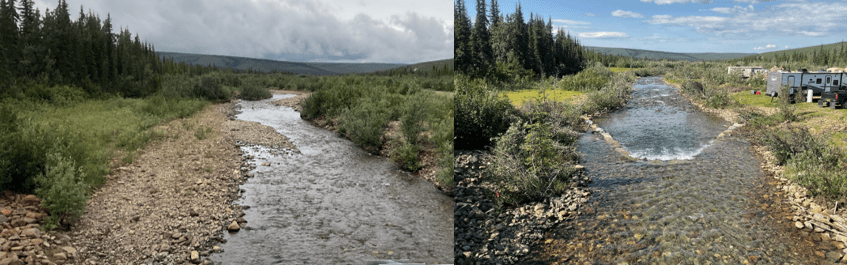
Nome Creek and a nearby unrestored stream, Harrison Creek, are being monitored to understand how restoration influences aquatic and terrestrial insect communities. These macroinvertebrates represent a valuable prey source for drift-feeding salmonids. The BLM sampled drifting macroinvertebrates in 2024 and 2025 and plans to continue sampling throughout the 2026 season. Sarah Nyland, an undergraduate researcher, is analyzing structural metrics of stream macroinvertebrate communities, including concentration, richness, and biomass, to determine whether Harrison Creek is a suitable control for post-restoration monitoring in Nome Creek, and to investigate changes in Nome Creek over the first three years following restoration.
Dakota Keller: Cripple Creek and Nome Creek
Dakota Keller, a master’s student in biology, is investigating how benthic macroinvertebrate communities respond to stream restoration at Cripple Creek in Fairbanks as well as Nome Creek. Both streams have a history of placer gold mining, which has degraded fish habitat and reduced the availability of aquatic prey. As a result, they serve as important sites for testing restoration strategies aimed at improving both the quality and quantity of habitat for salmonids. Dakota’s thesis draws on two seasons of macroinvertebrate sampling to characterize early stages of ecological recovery and to evaluate how biological communities respond over time following restoration. These data will help assess how restoration influences fish prey resources and overall habitat quality in Interior Alaska streams impacted by mining at both Cripple and Nome Creeks.
Results from Cripple Creek indicate similar macroinvertebrate abundance, richness, and diversity across restored and unrestored reaches, with statistical models supporting higher biomass only in the unrestored upper reach. Community composition was also broadly similar among reaches, suggesting that larger, landscape-scale factors may play a stronger role than reach-scale restoration alone. However, an important finding is that aquatic invertebrates are now present in the restored reach at levels comparable to unrestored sections after only 1 or 2 years, despite the channel having been dry for more than 80 years prior to restoration. These findings highlight the early stages of biological recovery following flow restoration. Continued monitoring will be essential to track how these communities develop as the system matures.
Dakota’s results from Nome Creek suggest differences in macroinvertebrate communities both spatially and temporally across restored and unrestored reaches. There are specifically macroinvertebrate differences in abundance, richness, diversity, and biomass when comparing the unrestored lower reach (within a highly-altered section called the “Maze”) to the restored reaches and the upstream, unrestored reach. Potential drivers of these differences between reaches will be further examined with final results expected this summer.
Thomas House: Coal Creek
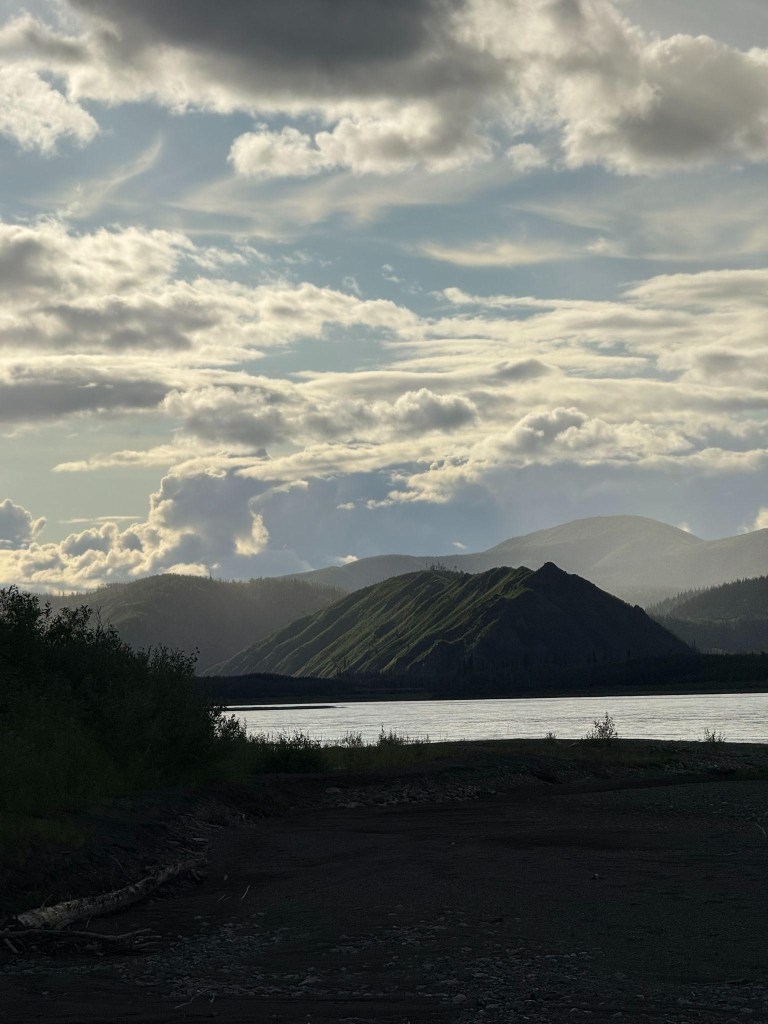
Thomas House is continuing his work at Coal Creek in Yukon–Charley Rivers National Preserve. Field sampling at Coal Creek has been successfully completed, and laboratory analysis is now underway. Macroinvertebrate samples collected using a Surber sampler are currently being sorted, identified, and measured. These data will provide insight into how historic placer mining has influenced aquatic community composition, as well as the availability of energetic resources within the stream.
Using these data, Thomas will parameterize a bioenergetics model (Fish Bioenergetics 4.0) to estimate growth potential for juvenile Chinook salmon throughout the summer foraging season. This approach allows us to link changes in prey availability and temperature directly to fish growth, offering a functional perspective on habitat quality. Coal Creek is also being considered as a potential restoration site, and bioenergetics modeling offers a powerful way to establish quantitative baseline conditions. By applying this framework both before and after restoration, we can evaluate changes in growth potential and better assess project success in terms that are directly relevant to fish populations.
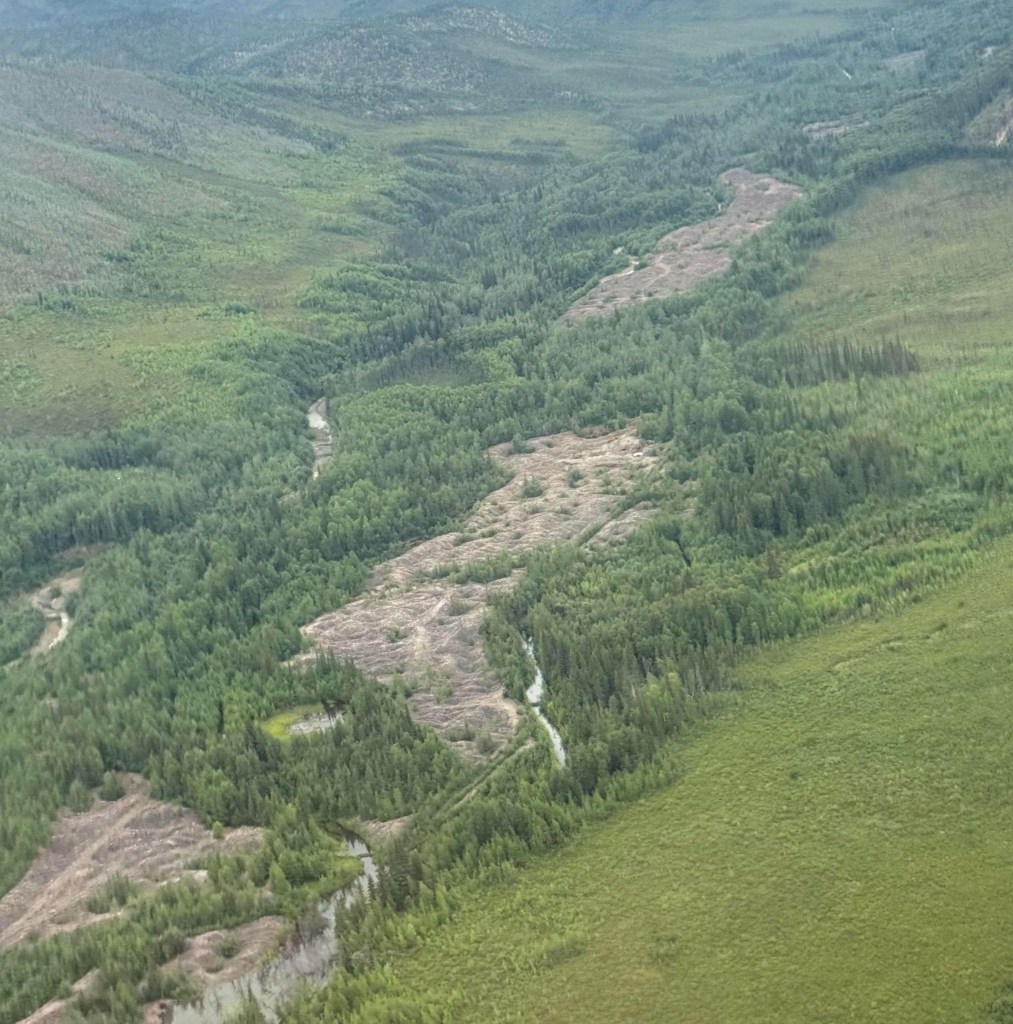
This work is particularly important with regard to the massive declines in Yukon basin Chinook salmon populations. By comparing Coal Creek to nearby reference systems we aim to better understand how long term mining-related impacts to rearing habitat influence juvenile salmon growth. Preliminary observations suggest notable differences among sites. For example, reference streams such as nearby Thanksgiving Creek have supported Chinook presence alongside higher macroinvertebrate densities, while past years’ data from Webber Creek further highlight the productivity of this system when undisturbed by mining. Continued analysis will help clarify how these differences translate into energetic conditions for juvenile fish.
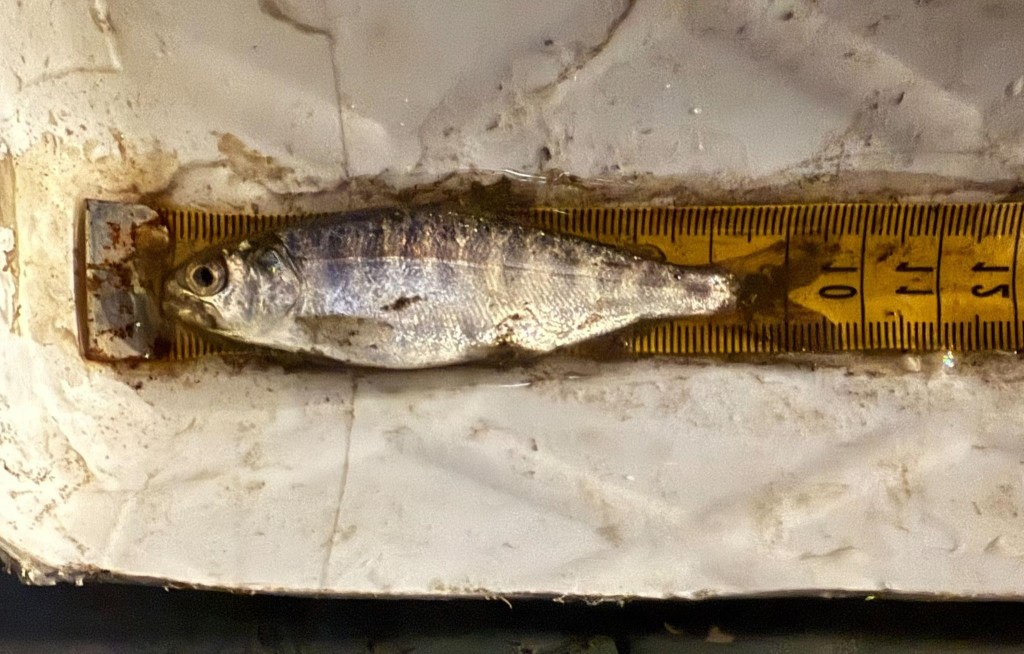
Together these projects provide a clearer picture of how habitat alteration influences food webs and fish growth, and demonstrates how implementation of biomonitoring can inform more effective, outcomes-focused restoration strategies.
 Arctic Beringia Fish Ecology