Kukpuk River Fish Contaminants Study
Background
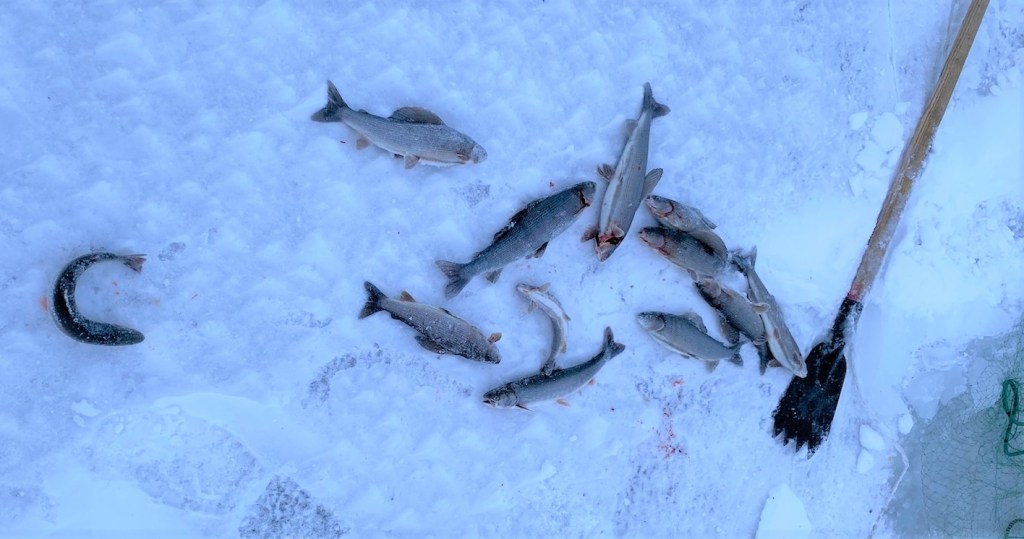
In northwest Alaska, grayling (Iñupiaq: sulupaugak) are an important subsistence harvest species for rural and Indigenous residents in both coastal and inland communities. This project focuses on the grayling stock in the Kukpuk River (see map below), from which fish are harvested by subsistence fishers in the coastal village of Point Hope during the winter under-ice net and rod-and-reel fishery. The annual harvest by Point Hope residents in 2014, which represents the most recent data, was estimated to be > 7,000 fish representing more than 6,300 pounds of harvested food. This ranked third behind Arctic and saffron cod as the top non-salmon fish species in terms of number harvested. Thus, grayling can comprise a significant portion of subsistence harvest for Point Hope and other Northern Alaska villages, and maintaining healthy populations of these fish is vital to food security for residents of the region.
.

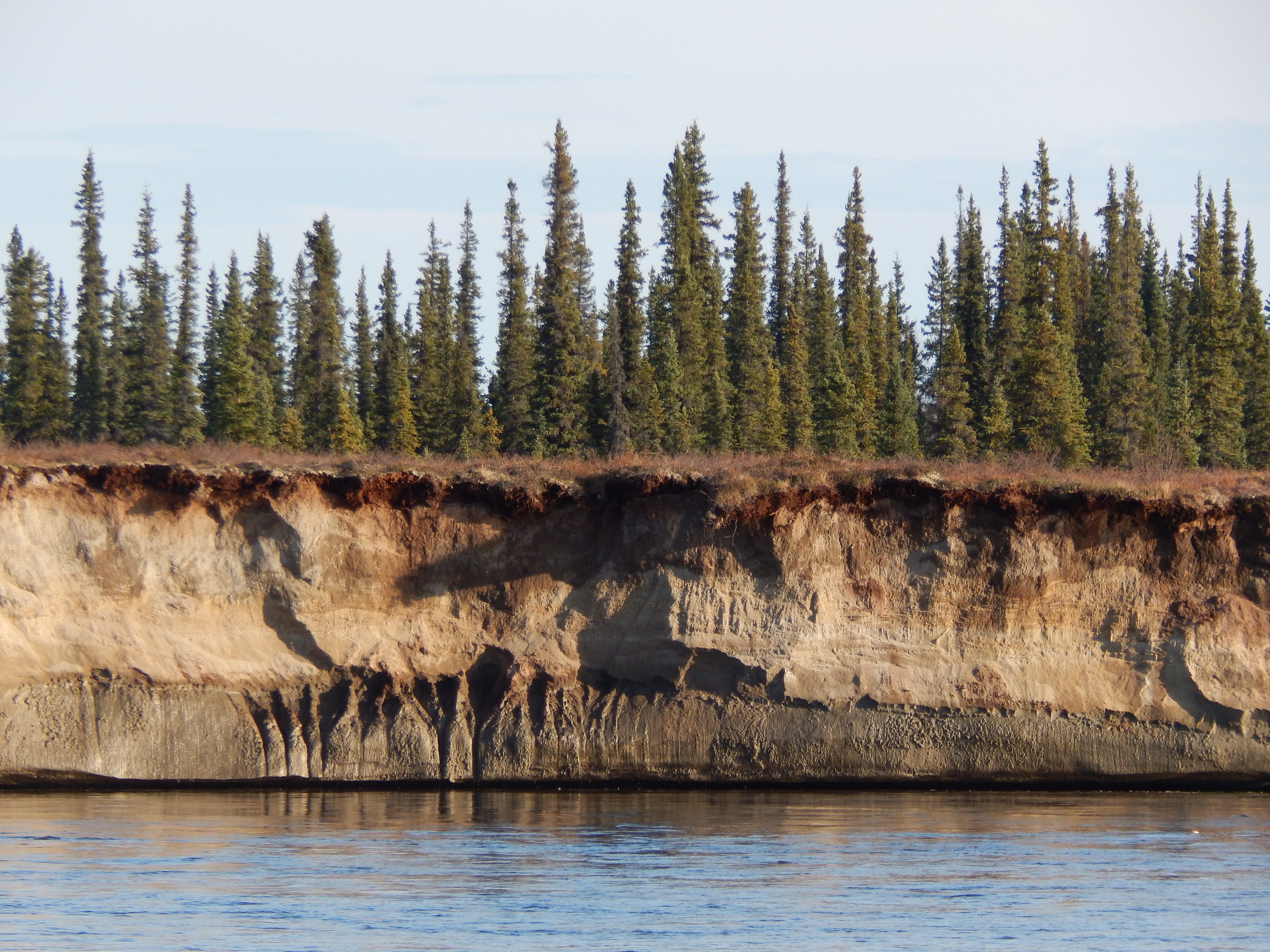
Rusty-colored mineral seeps have been seen at increasing frequency in Arctic rivers since 2020, including in the Kukpuk River (see orange dots in map above). These seeps are thought to be caused by permafrost thaw and soil and mineral mobilization, likely affect the habitat use, movements, and bioaccumulation of metals in grayling and other riverine fishes that encounter them. These seeps have become ubiquitous in northern Alaska rivers, particularly during the warmest months of summer (July-August), and have triggered alarm among subsistence harvesters, scientists, and recreationists that encounter them. Areas along rivers where permafrost thaw is occurring generate outflows of soil and minerals that foster periphyton growth and result in orange-colored water that has unknown effects on the health and behavior of invertebrates and fish of different life stages (see images of seeps on the Kukpuk River in the picture below).
Given the potential impacts of rusting rivers on Kukpuk River Arctic grayling and subsistence harvesters who value them, we are undertaking a project in collaboration with staff from the North Slope Borough of Wildlife Management and the Alaska Department of Fish and Game Sport Fish Division, with the following objectives:
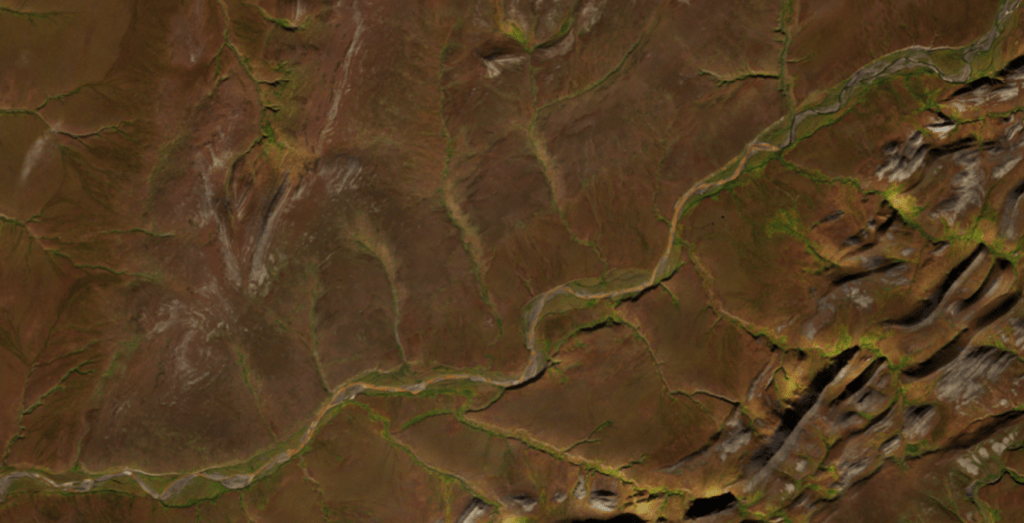
-Characterize locations, frequency of occurrence, and magnitude of rusty-colored mineral seeps affecting the Kukpuk River drainage using Sentinel-2 satellite imagery available from 2017-2025.
-Assess contaminant concentrations in aquatic invertebrates, vegetation, and sediment and compare between Kukpuk and Ipewik rivers
-Assess heavy metal contaminant loads in grayling caught in the Kukpuk (with seeps) and Ipewik(no seeps) rivers to establish baseline levels and identify any differences associated with river discoloration
Methods
Grayling will be captured in July 2025 (summer feeding period) during two fly-in, float out sampling trips on the Kukpuk and Ipewik Rivers. Up to 20 adult fish per tributary (forty total) will be captured and euthanized for heavy metal contaminants analyses. Aquatic vegetation, aquatic invertebrates, and sediment samples (ten total) will also be collected along both tributaries.
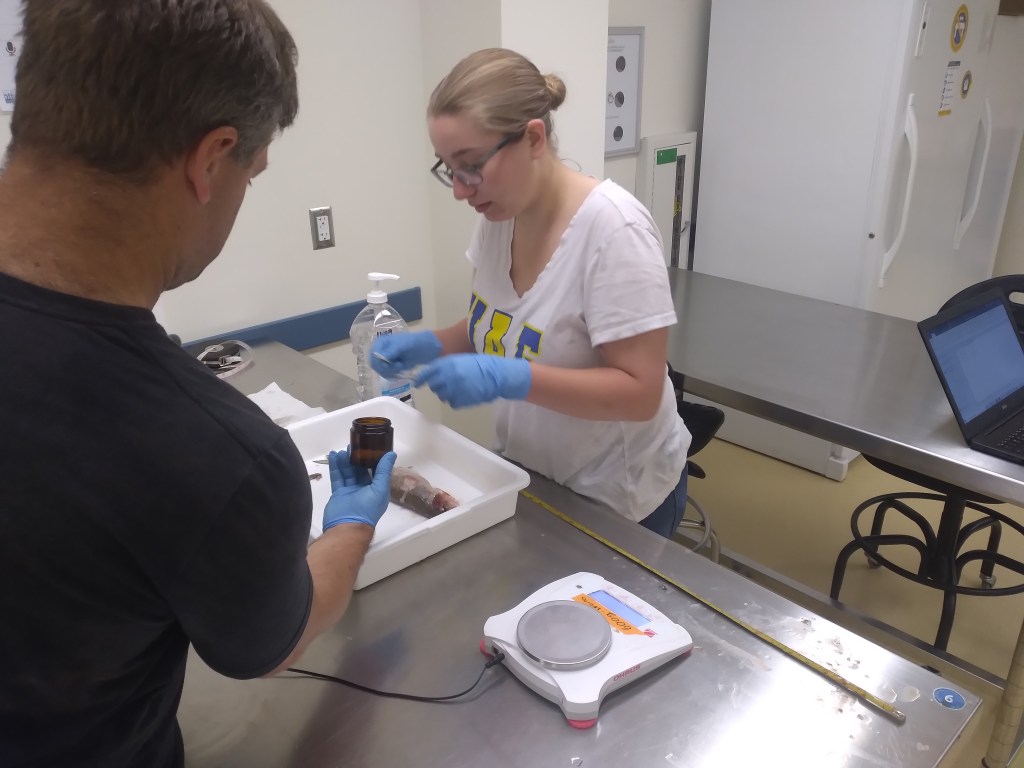
Euthanized fish and other samples will be placed in individual, clean bags and kept cold in a cooler with freezer packs until they can be frozen. Next, in the laboratory, fish will be removed from the freezer and thawed minimally to facilitate removal of skin and extraction of 10 grams of dorsal muscle tissue. Muscle tissue will be examined because this is the part of the fish that is most-often consumed by subsistence harvesters. Samples will be shipped frozen to an external laboratory for mercury, cadmium, zinc, and lead analyses. These analytes are selected because they bioaccumulate naturally in fish or are commonly elevated in areas with permafrost thaw seep influence.
Contaminants data will provide baseline levels in advance of any future mineral seep or human development activity that may result in increases of heavy metals in the environment and along the food chain. Assessments will be made regarding the contaminant values found and applicable state and national fish consumption guidelines.
Status
Fish, invertebrate, and sediment collections were accomplished in July 2025. See a narrative and pictures from this fieldwork here. Samples were prepared and sent off to an external laboratory in August 2025, and results were returned at the end of that month. Data analyses are currently underway.
Next Steps
October 2025-March 2026: Data analyses at external laboratory
Summer-autumn 2026: Final data analyses and project summary. Community meeting in Point Hope, AK to explain results. Additional data collection if necessary
This project is funded by the U.S. Bureau of Land Management. Activities were conducted under Alaska Department of Fish and Game and other relevant research permits
 Arctic Beringia Fish Ecology