Fish Leech Effects on Northern Pike
Background
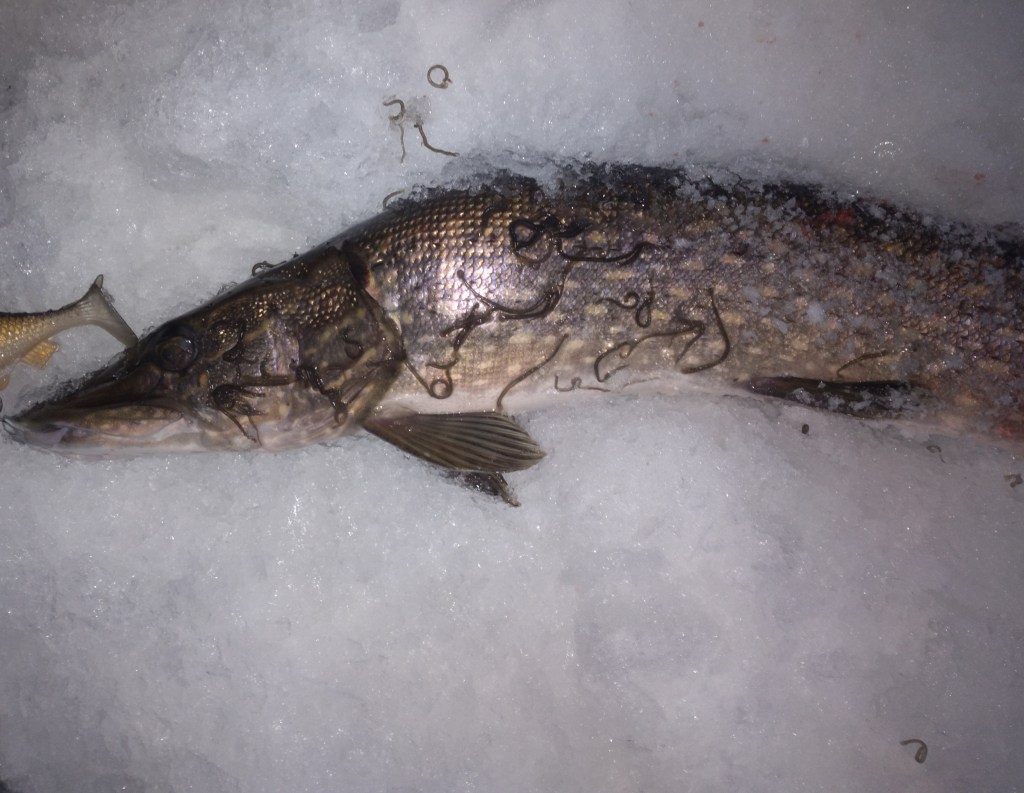
Climate change effects in high-latitude environments, including in Interior Alaska, are occurring at a faster rate due to Arctic amplification. One such effect, the phenomenon of lake drying, has resulted in a loss of surface area and a shallowing of some water bodies in northern Alaska. This may result in crowding of fish populations into smaller habitats, particularly in winter when ice cover encroaches, which could promote pathogen transmission and disease outbreaks. Warming water temperatures and longer ice-free seasons may lead to increasingly favorable conditions for population growth of ambient pathogens. For freshwater fishes in Interior Alaska, such outbreaks may have negative effects on individual growth and fitness, with population-level implications. Recent observations of gross infestation of pisicolid fish leeches on northern pike in some Interior Alaska water bodies is of concern.
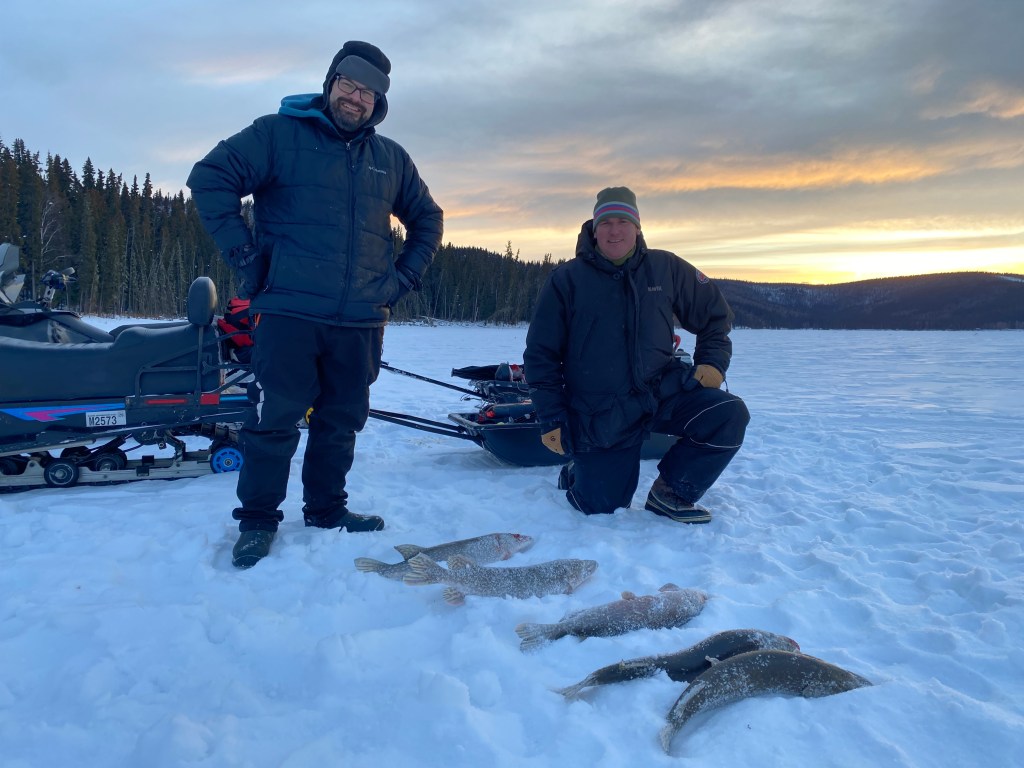
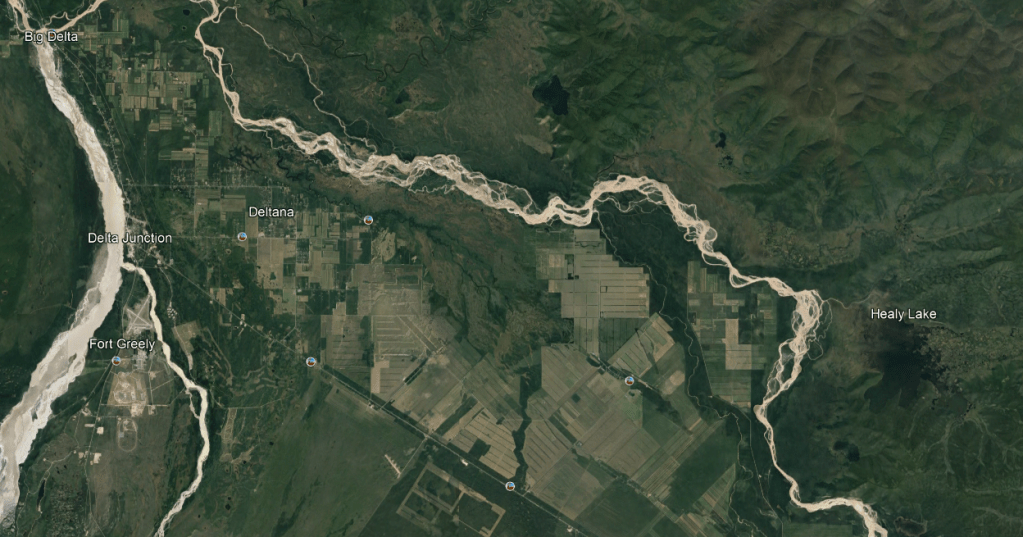
Northern pike are commonly harvested by Indigenous and rural Alaskans for subsistence, comprising an important component of their food security. Since 2019, recreational anglers including one of the investigators for this study have observed abnormally heavy infestations of piscicolid leeches on overwintering northern pike in Healy Lake in Interior Alaska. Healy Lake is a large, shallow, mud-bottom lake that connects to the Tanana River near Delta Junction, Alaska. It supports a subsistence fishery and a recreational fishery for local private property owners and visitors. In this lake, pike are concentrated in small, shallow overwintering habitats that may promote the attachment and spread of fish leeches. Qualitatively, fish with the highest infestations (estimated to be over 100 leeches on the skin, gills, and inside the mouth of pike) exhibit poorer body condition. The prevalence, causes, trends due to climate change, interaction with other stressors such as contaminant loads, and population-level implications of these infestations are unknown. This has caused a degree of alarm among fishers and biologists that is the impetus for this study.
Methods
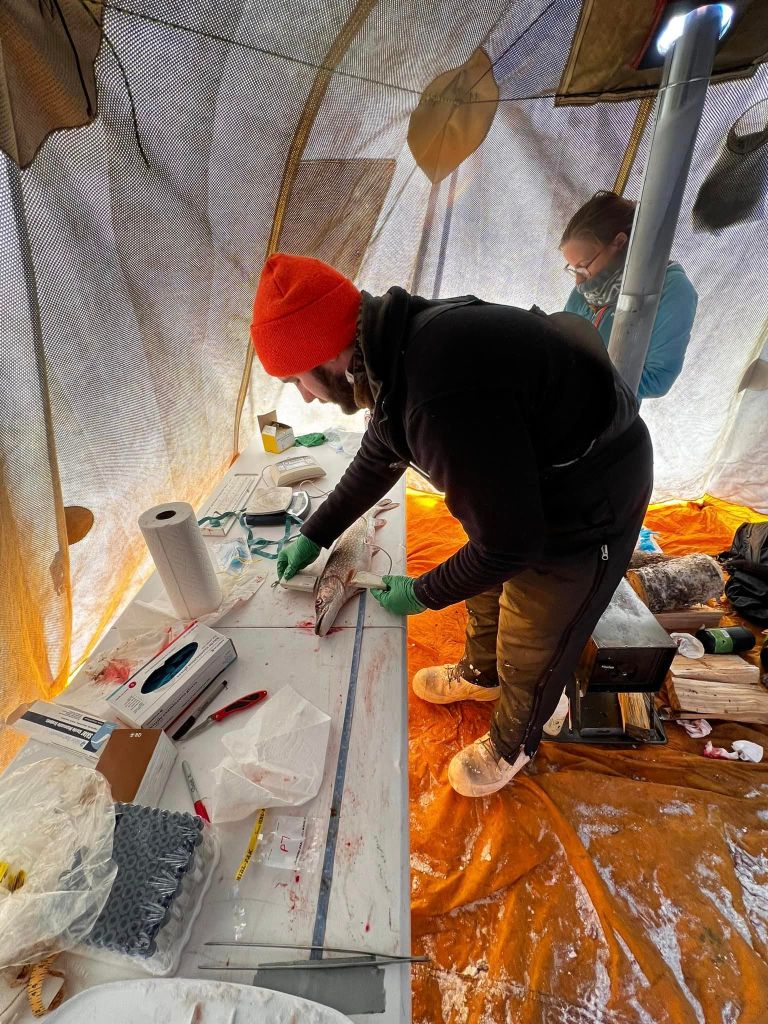
To assess the prevalence of the piscicolid leech infestation on northern pike we will catch >30 pike in Healy Lake, Alaska by rod and reel angling. Next, we will scrape all of the leeches off of the skin, gills, and mouth of the fish into a tray to be counted and weighed. The pike will then be examined to determine the correlation between infestation load and the host pike body condition. This will be completed by measuring the total body length, weighing the fish, and conducting bioelectric impedance analysis readings to generate body condition estimates for all of the host pike, which will be compared to the magnitude of infestation. We will also examine the correlation between host pike sex, age, and contaminant levels with leech infestation which will be done by euthanizing ~30 pike with variable infestation rates to be aged by examining the cleithra, sexed by internal organs, and analyzing muscle tissue for total mercury concentrations.
Status
All fish have been collected for the project. Labwork and data analyses are ongoing
Preliminary Results
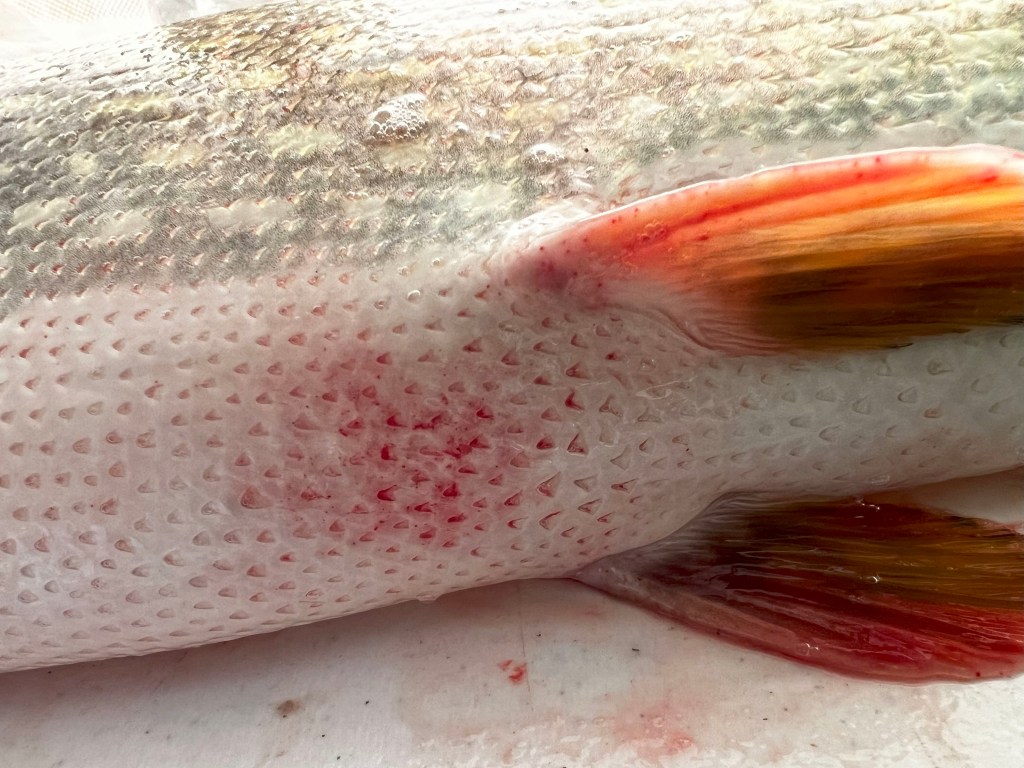
Pike with heavy leech infestation exhibit skin abrasions and often seem to be in poor body condition.
Next Steps
Data are being analyzed and written up, then will be transmitted to stakeholders
 Arctic Beringia Fish Ecology