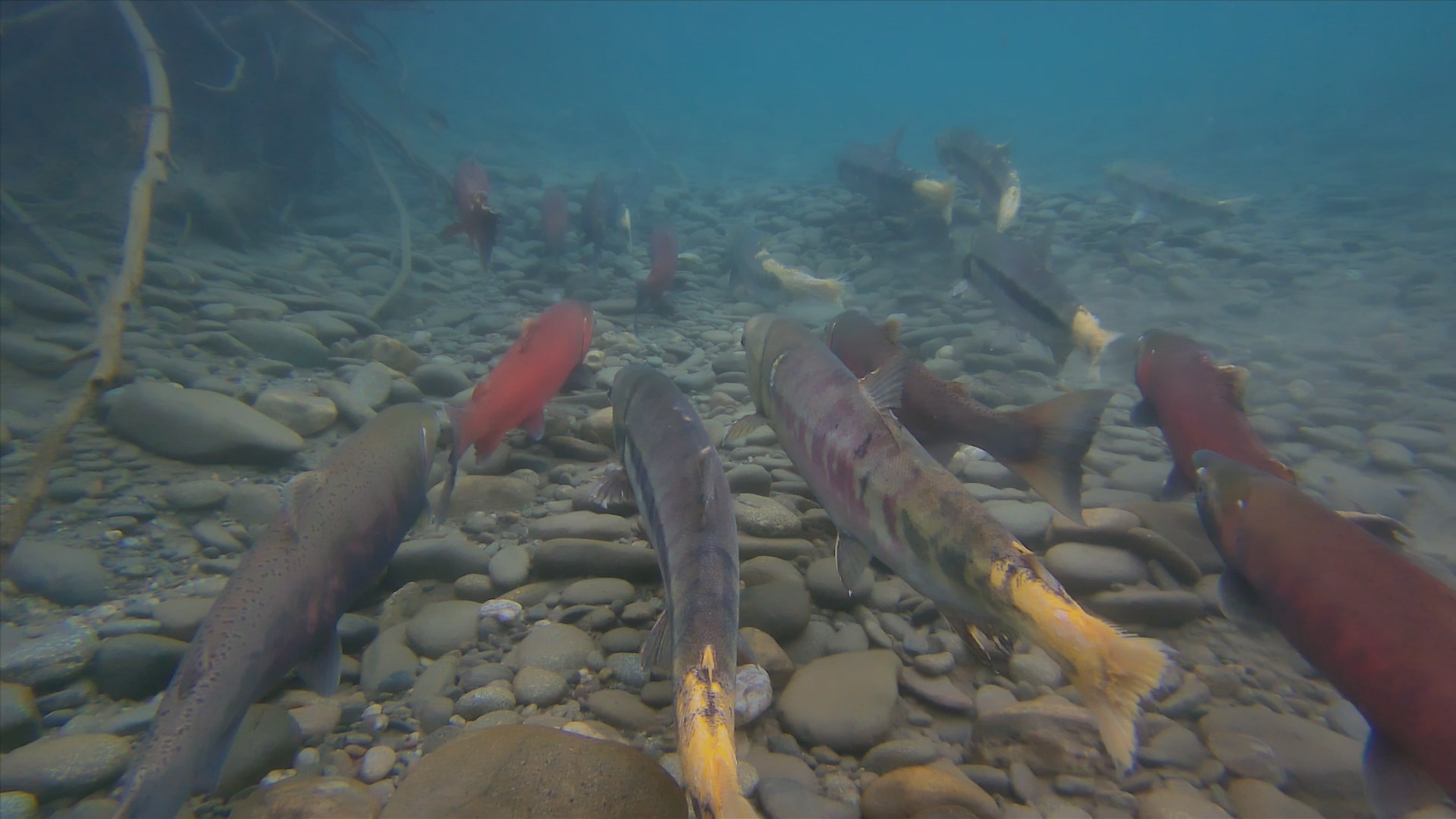
Yukon River Chum Salmon Pre-spawning Mortality
Background
Summer- and fall-run chum salmon are found throughout the Yukon River drainage in Alaska. Summer-run chum salmon are designated as fish that enter the Yukon River before July 15, while any fish entering after this date are denoted as fall-run fish. Lower Yukon, Koyukuk River drainage, and the Tanana River drainage largely hold summer-run populations, while fall-run chums can be found in the Tanana River drainage, Chandalar River, Sheenjek River, and other stocks at the Canadian border and beyond.
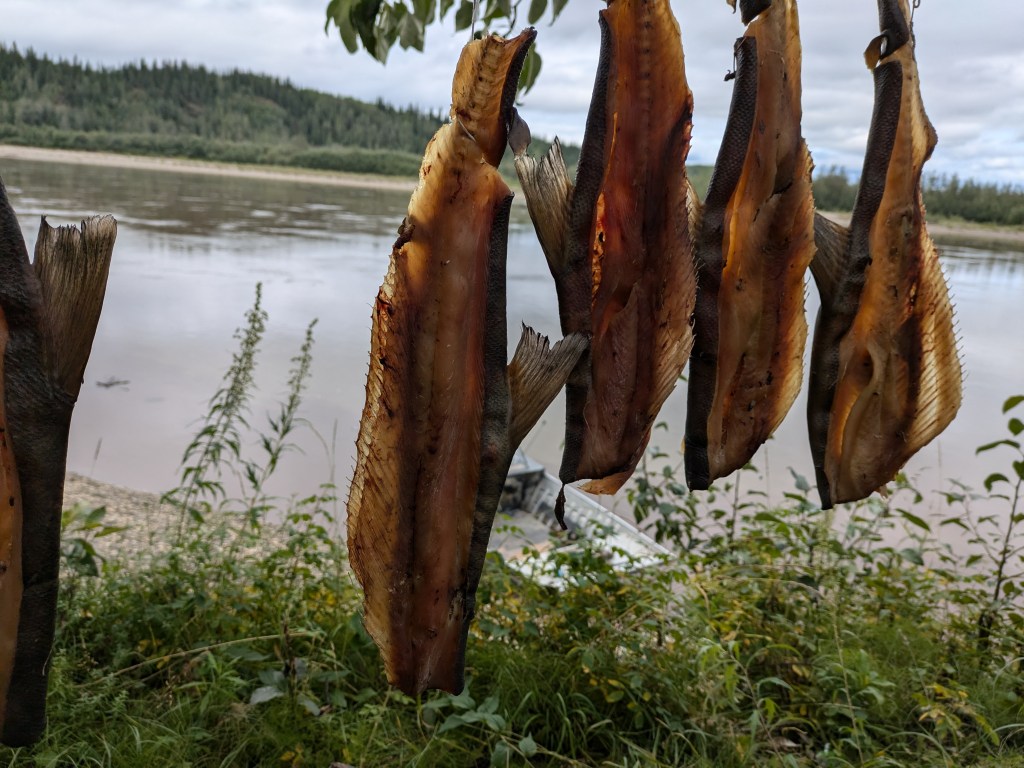
Fish from these runs are harvested along their migration routes from the Bering Sea to the Canadian border by subsistence fishers in the mainstem Yukon River and various tributaries (see above photo). Due to drainage-wide low abundance, Yukon River chum salmon subsistence and sport fishing restrictions/closures began in 2020, and population declines warrant scientific study to elucidate trends and drivers of this crash. Pre-spawn mortality, or the phenomenon where salmon die before they are able to expel their eggs or milt, is thought to be a factor in declines, but has not been investigated for chum salmon.

Warming water temperatures in spawning tributaries has been identified as a likely culprit of pre-spawn stress and mortality for summer-run chum and Chinook salmon in the Yukon River watershed. Low-gradient, shallow, spawning tributaries that are subject to solar warming, particularly during exceptionally warm years, have exhibited mass die-offs of salmon, and presumably heat stress and lower spawning production. Additionally, unpredictable and changing freshwater habitat conditions driven by climate change, such as flooding, disruption of seasonal cues, and changes in hydrology may also be factors that induce pre-spawn mortality of adult salmon. Finally, pathogens and maladies that affect salmon such as Ichthyophonus hoferi and proliferative kidney disease may also contribute to pre-spawn mortality.
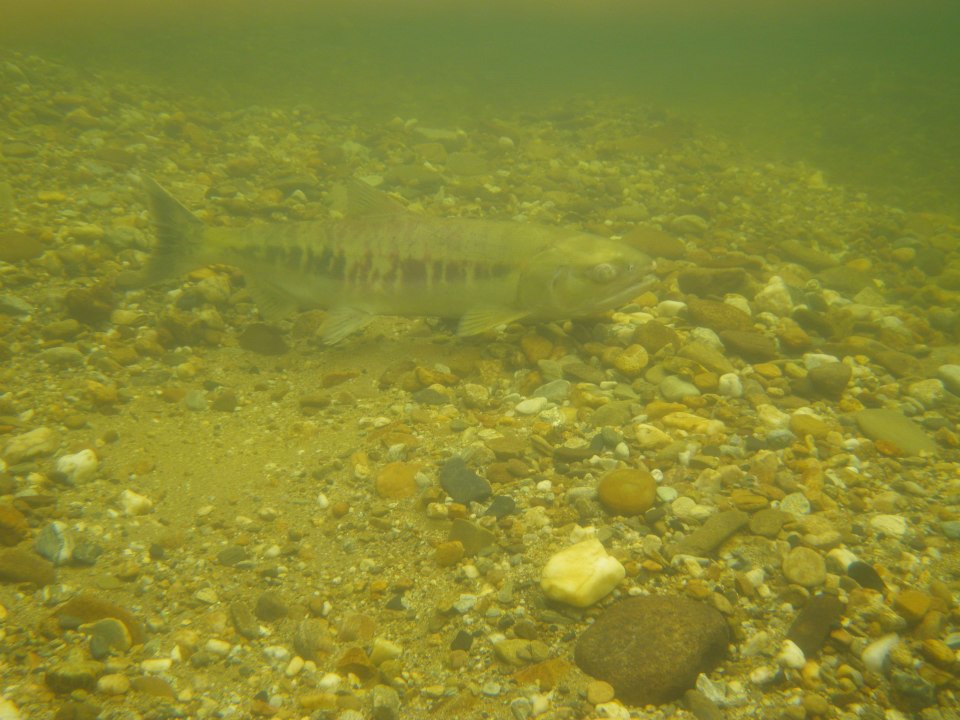
To address the considerations listed in the above section, our proposed project, in collaboration with staff at the Koyukuk National Wildlife Refuge, seeks to investigate pre-spawn mortality rates and factors affecting summer and fall-run adult chum salmon at several Yukon River drainage tributaries through the following objectives:
-Identify rates of pre-spawn mortality and gonad retention of chum salmon in tributaries of the Koyukuk and Nenana River drainages over the course of two spawning seasons to estimate ultimate reproductive success (i.e., “realized escapement”).
-Consider potential drivers of pre-spawn mortality across a variety of habitats, life histories (summer vs fall run), infection status (Icthyophonus hoferi and proliferative kidney disease), and stream thermal regimes.
-Summarize findings and present them to Yukon River salmon stakeholders for use in management decisions and publish research to inform the broader scientific community
Methods
To assess prevalence and rates of pre-spawn mortality, carcasses of freshly-expired salmon will be measured and examined at all sites following established salmon carcass survey methods. Each carcass will be weighed using a hanging field scale. The flanks of carcasses will be slit and remaining eggs and milt (gonads) that were not expelled during spawning will be extracted and weighed on a portable digital scale. Salmon that have not fully expelled eggs and milt will be determined to have suffered pre-spawn mortality.
To investigate the role of parasites and disease on pre-spawn mortality rates, heart and kidney tissue samples will be collected from up to 75 chum salmon carcasses exhibiting pre-spawn mortality and 75 exhibiting full extrusion of gametes each season. Tissues will be preserved for histological examination to ascertain infection rates of Ichthyophonus hoferi infection and proliferative kidney disease (PKD; caused by Tetracapsuloides bryosalmonae). Results will be compared between individuals that do and do not exhibit pre-spawn mortality, to assess whether prevalence of disease is a significant factor.
Water quality parameters including temperature, turbidity, pH, and specific conductivity will be measured and recorded at spawning reaches at every visit to every site. Spawning salmon density will be recorded at locations where carcasses are encountered. Water temperature data loggers will be installed at all sites to capture continuous temperatures throughout the spawning season. These parameters will be evaluated for associations between pre-spawn mortality prevalence and water temperature, pH, turbidity, interspecific density, and other water chemistry values for each site, species, and year.
Status
Funding has been secured for this project and fieldwork will began in July 2025.
Next Steps
July 2025-December 2026: Fieldwork, sample collection, labwork, data analyses.
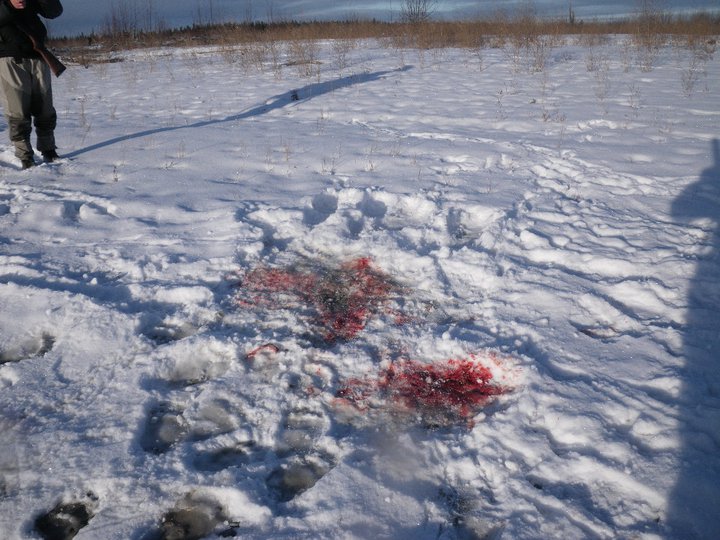
This project is funded by the U.S. Bureau of Land Management. Activities will be conducted under Alaska Department of Fish and Game and other relevant research permits
 Arctic Beringia Fish Ecology