Arctic Slope Fish Overwintering Ecology
Background
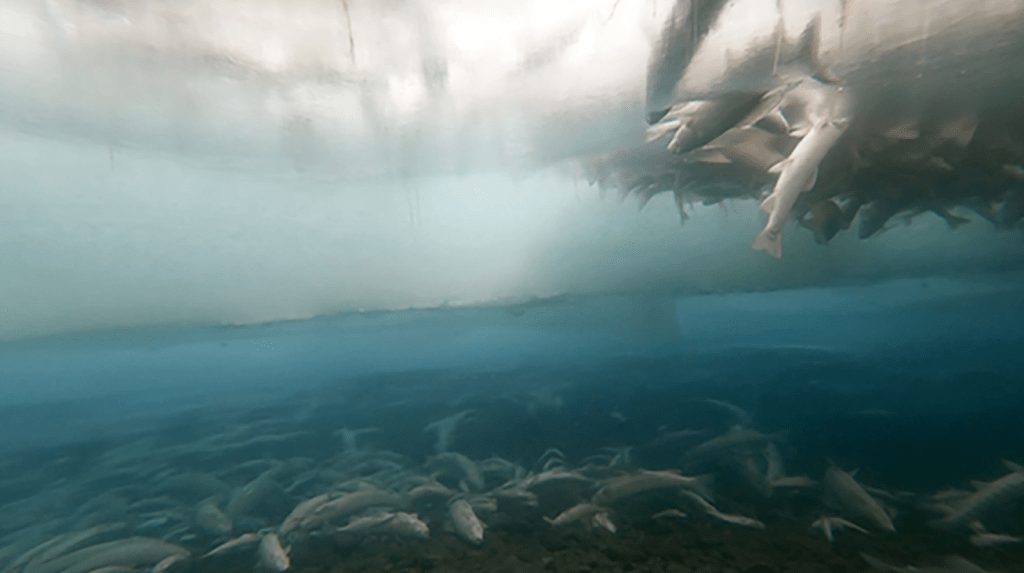
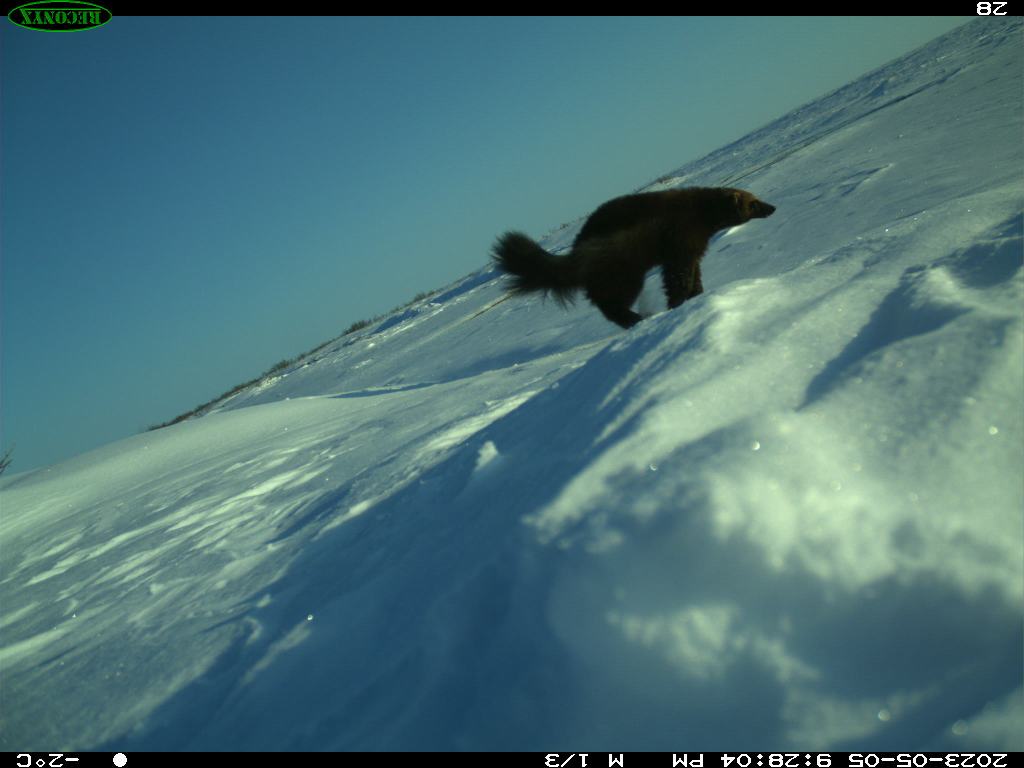
On Alaska’s North Slope, perennial riverine springs play an important role in the distribution and ecology of aquatic biota. For overwintering fish, perennial springs are an important unfrozen habitat crucial for wintertime survival, spawning, and rearing, showing that streams without spring input commonly freeze solid during winter. Springs can harbor an entire river’s fish population for over six months of the year, and these high concentrations of fish may serve as food sources for predators and scavengers including wolverines, foxes, ravens, and American dipper. As such, these scattered, limited perennial spring areas are likely critical for not only fish but also mammals occupying this region during the long, cold, food-poor winter months. Nonetheless, little is known about wintertime habitat conditions at these sites, including possible effects of local ice conditions on fish mortality and subsequent scavenging activity. The need for additional study of North Slope overwintering spring habitats was highlighted by the observation of a mass fish die-off at a perennial spring along the Shaviovik River in April 2022. The fish die-off occurred in a small spring-fed pool that was completely encased in ice during late winter. The lack of an air-water interface likely caused hypoxic conditions that killed more than 150 overwintering Dolly Varden and Arctic grayling, 56 of which were carried onto the surface of the ice during an overflow event and made available to scavengers including wolverines. This die-off was found when a WCS field crew investigated the site following visits by a GPS-collared wolverine.
Spring water flow maintained a separate open water channel just 200 meters away, highlighting the impact of local hydrological conditions to overwintering fish mortality. These observations suggest that perennial springs may not always be a haven for overwintering fishes as commonly thought, that conditions may be changing over time due to climate change, and that springs may provide an important food source for terrestrial predators and scavengers. Understanding the ecological consequences of under-ice habitat dynamics at perennial springs has value for both our broader understanding of Arctic ecology and for effective conservation of overwintering habitat critical to fish and wildlife species.
Methods
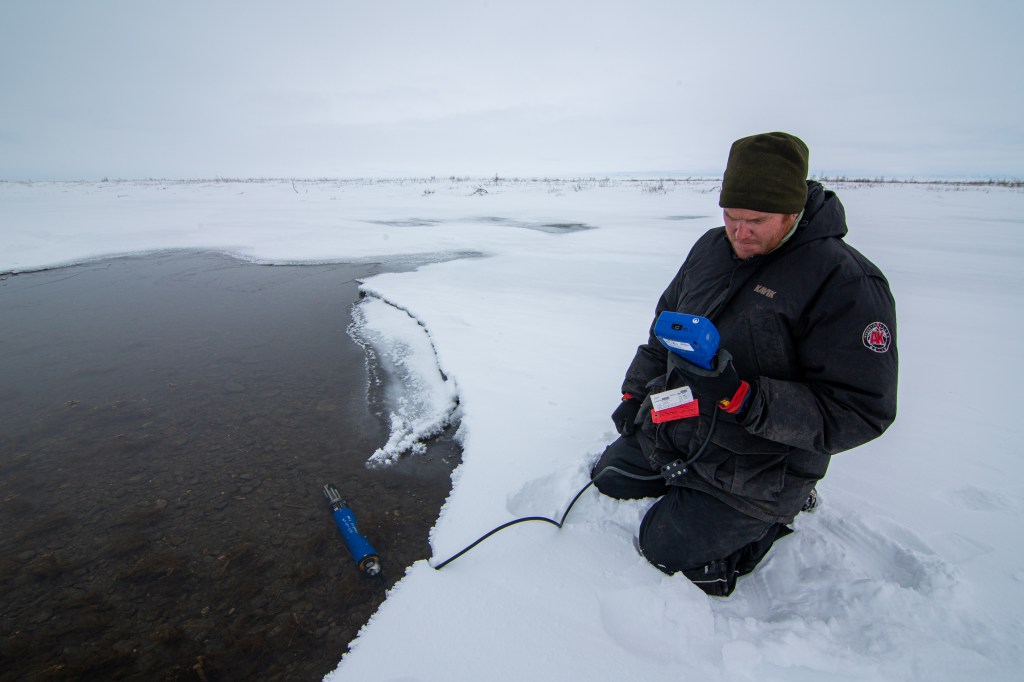
Four Onset HOBO U26 dissolved oxygen data loggers were moored in waters at the spring site throughout the winters of 2022-2023, 2023-2024, and 2024-2025. Ten Arctic grayling and ten Dolly Varden were collected at the Shaviovik Spring site in April 2024 via gillnet. In the laboratory, fish were dissected and sagittal otoliths were removed. Other data and samples such as diet, muscle tissue, sex, and length were also collected for potential use. Sagittal otoliths will be ground and polished to facilitate age estimation and laser ablation inductively coupled plasma mass spectrometry. Manganese and calcium microchemistry will be utilized to ascertain periods of time that fish experienced hypoxia during their lives.
Check out a 2026 open access photo diary article describing the work
See fieldwork updates from this project at the pages below:
 Arctic Beringia Fish Ecology