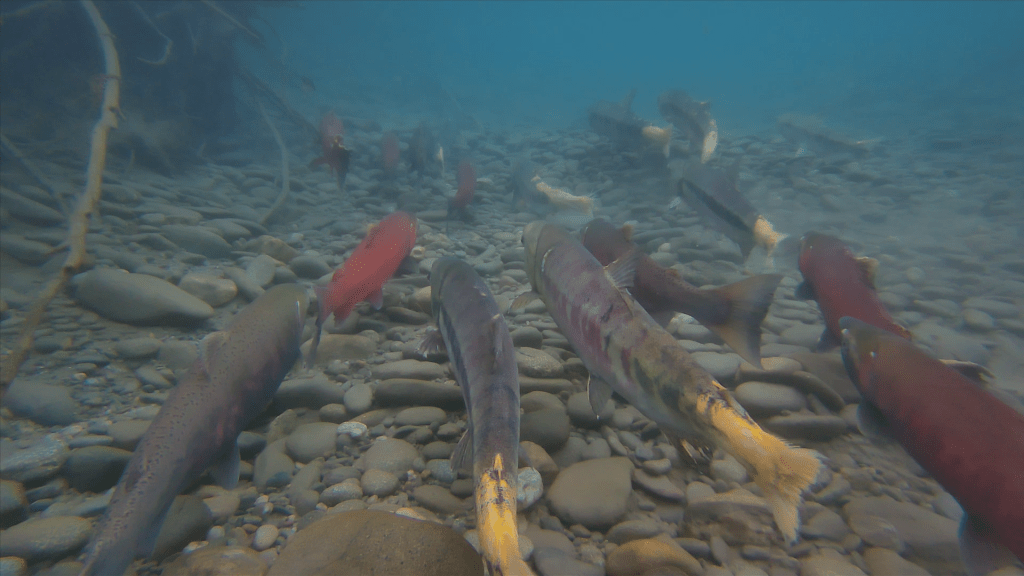
Autumn 2025 (2nd) Edition of the Yukon River drainage salmon habitat restoration newsletter
We are happy to bring you the second (Autumn 2025) edition of our newsletter covering habitat restoration activities and topics related to Yukon River drainage salmon! This edition is full of updates from activities that occurred during the 2025 summer season. Below are some reminders about the newsletter goals and scope. Please read these before you browse the new articles!
This publication is an output from an Outreach and Awareness Working Group that was formed during a February 2025 Interior Alaska Salmon Habitat Restoration Summit put on by the Tanana Valley Watershed Association, Trout Unlimited, and others. Read a recap of the summit here.
This newsletter will be produced twice each year, once in the spring and once in the autumn, to deliver information and updates on habitat restoration activities in the Yukon River drainage. Read below for more information:
What does the newsletter cover?
The main focus is to report planned and accomplished stream restoration activities that potentially benefit salmon in the Yukon River drainage of Alaska and Canada. These efforts include those led by tribal organizations, state and federal governments, universities, and conservation groups. Additionally, restoration techniques, programs, and publications are included. Information about laws and regulations, events, meetings, management, and science of salmon may be covered, if relevant to restoration
What is outside the scope of the publication?
Topics including salmon harvest management, marine phases and environments, bycatch, and politics are better-suited for other venues and will not be tackled here.
Why should people care about Yukon River salmon and habitat restoration?
Recent declines of Chinook (king), chum, and coho salmon in the Yukon River drainage have had devastating impacts on subsistence harvest, Indigenous and rural Alaskan culture, dog mushing teams, sport fishers, commercial fishers, and the productivity and integrity of freshwater environments. The oceans where salmon spend much of their lives, and the Yukon River drainage, encompass a massive geographical area and thus humans are limited in their effectiveness to help salmon populations recover from declines. However, one environment that is achievable to improve is the freshwater habitat important for adult salmon spawning and juvenile salmon rearing, especially where past human activities have negatively impacted streams. These impacts may have occurred through historic and current mining, urbanization, construction, flood management, or other factors.
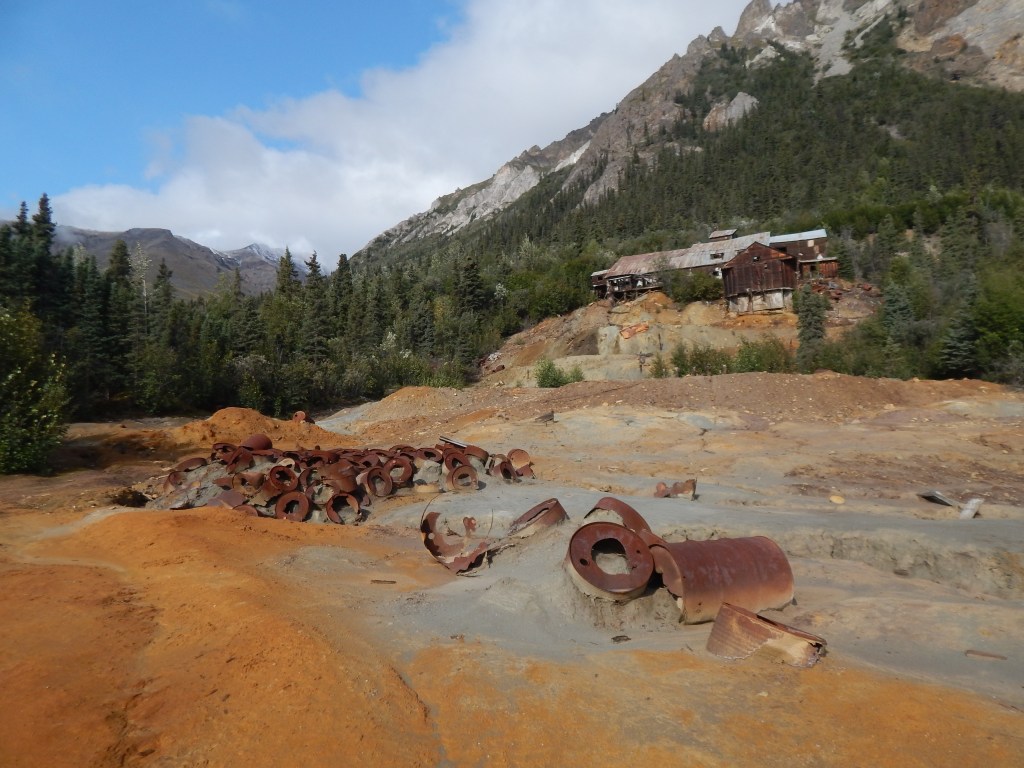
Through stream restoration, salmon spawning and rearing habitat may be improved and may contribute towards the rehabilitation of struggling populations. Stream restoration has been used for this purpose in many areas of the continental United States, with measurable positive effects on salmon, other fish, aquatic invertebrates, water quality, amphibious mammals, and people. However, it has not been conducted as extensively in Alaska, where the remoteness of locations and extremes of climate can pose unique logistical challenges.
Who is the newsletter for?
This publication is geared towards providing information to restoration practitioners, as well as any members of the public who are interested in the status of Yukon River drainage salmon, and how science is being used to improve their freshwater habitat.
Who is producing it?
A group of nonpartisan volunteers with backgrounds in biology and fisheries, with experience and knowledge of stream restoration techniques and activities in Alaska. This includes staff from the Wildlife Conservation Society, Alaska Department of Fish and Game, Trout Unlimited, BLM, Tanana Valley Watershed Association, and others.
Who can I contact to contribute, get involved, or give feedback?
Please feel free to email newsletter coordinator Kevin Fraley at kfraley@wcs.org with any feedback, requests, or interest in involvement.
 Arctic Beringia Fish Ecology