UAF Coal Creek Invertebrate and Fish Bionergetic Studies
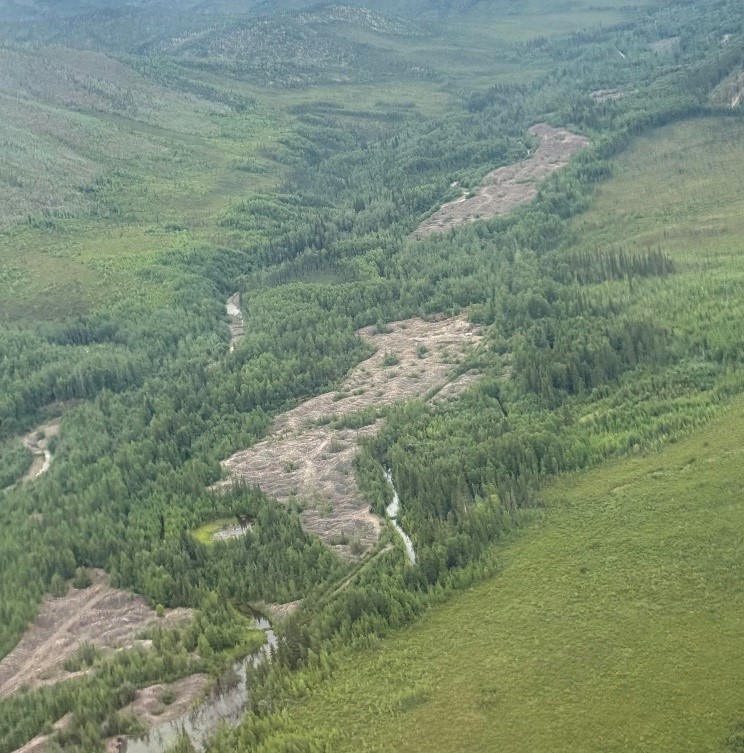
Coal Creek is a former placer mine located on the upper Yukon River, roughly 60 miles upstream from Circle, Alaska. In addition to its role as an important cultural and historical site, Coal Creek represents potential rearing habitat for juvenile Chinook salmon (Oncorhynchus tshawytscha), a species that has undergone dramatic declines across the Yukon drainage. However, decades of placer mining have altered stream morphology in ways that likely disrupted the aquatic invertebrate food base needed to support juvenile growth.
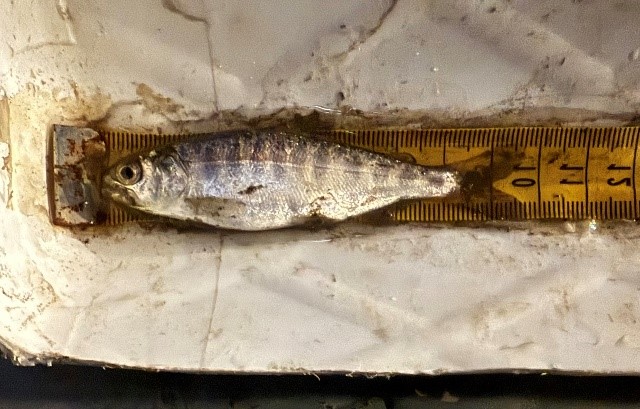
Preliminary sampling of invertebrate communities shows higher abundance and diversity of macroinvertebrates in nearby unmined reference streams in comparison to mining-impacted sections of Coal Creek, suggesting long-lasting impacts from mining. To better understand these long-term effects (50+ years post-mining) on rearing fish populations and their prey base, University of Alaska Fairbanks M.S. student Thomas House and team launched a study to model juvenile salmonid growth potential in Coal Creek. They are doing this by quantifying both abundance and energy density of macroinvertebrate prey to fit a fish bioenergetics model.
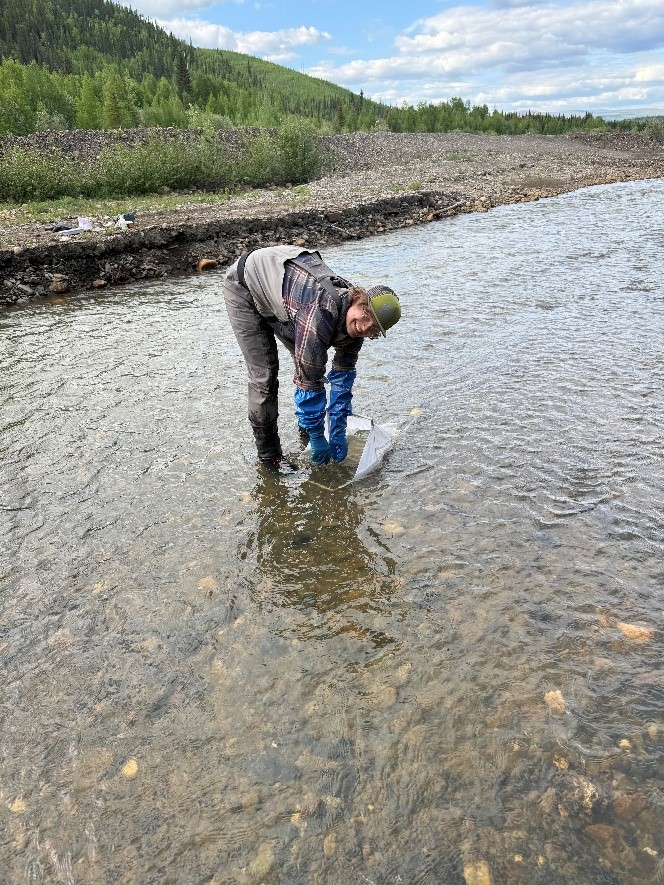
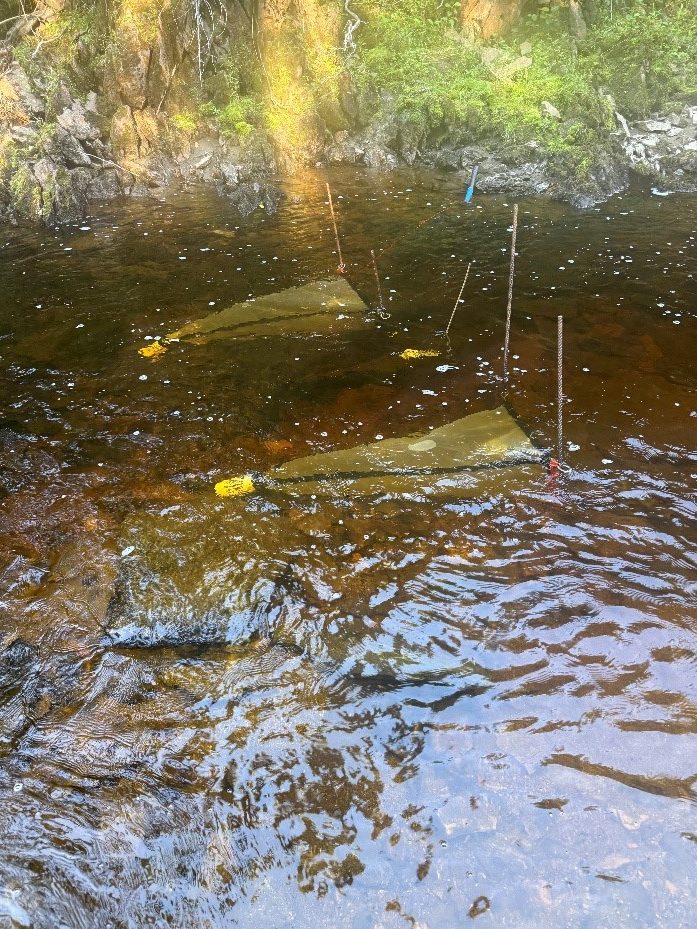
This summer, field sampling was completed at Coal Creek as well as two nearby unmined reference streams—Sam Creek and Thanksgiving Creek. Macroinvertebrate prey availability was measured using drift and Surber samples, collected fish diet samples via gastric lavage (stomach flushing) to validate prey selection, and recorded water quality and riparian cover in each stream reach.
With fieldwork successfully wrapped up, the collected samples will now be processed and analyzed during winter 2025-2026, laying the groundwork for a clearer understanding of how legacy mining continues to shape stream ecosystems and salmon production potential in the Yukon.
Contact tfhouse@alaska.edu with any questions about this work.
 Arctic Beringia Fish Ecology