
February 2025 Interior Alaska Salmon Habitat Restoration Summit Recap
In late February 2025, organizers from the Tanana Valley Watershed Association, Trout Unlimited, and various tribal organizations put on a three-day Interior Alaska Watershed Restoration Summit. The summit was held at the Birch Hill Cross Country Ski Center in Fairbanks, AK, not far from the banks of the Chena River.
The primary objectives of the Summit were to support regional coordination and technical capacity interchange and development amongst agencies, non-profits, and Alaska Native organizations for watershed restoration and conservation, specifically in the Yukon River Drainage.
A diverse group of people interested in Yukon River drainage salmon and habitat restoration participated, including representatives from the Alaska Department of Fish and Game, the Bureau of Land Management, Indigenous Sentinels Network, US Fish and Wildlife Service, Yukon River Drainage Fisheries Association, Wildlife Conservation Society, University of Alaska, Fairbanks Soil and Water Conservation District, Trout Unlimited, the National Park Service, and more.
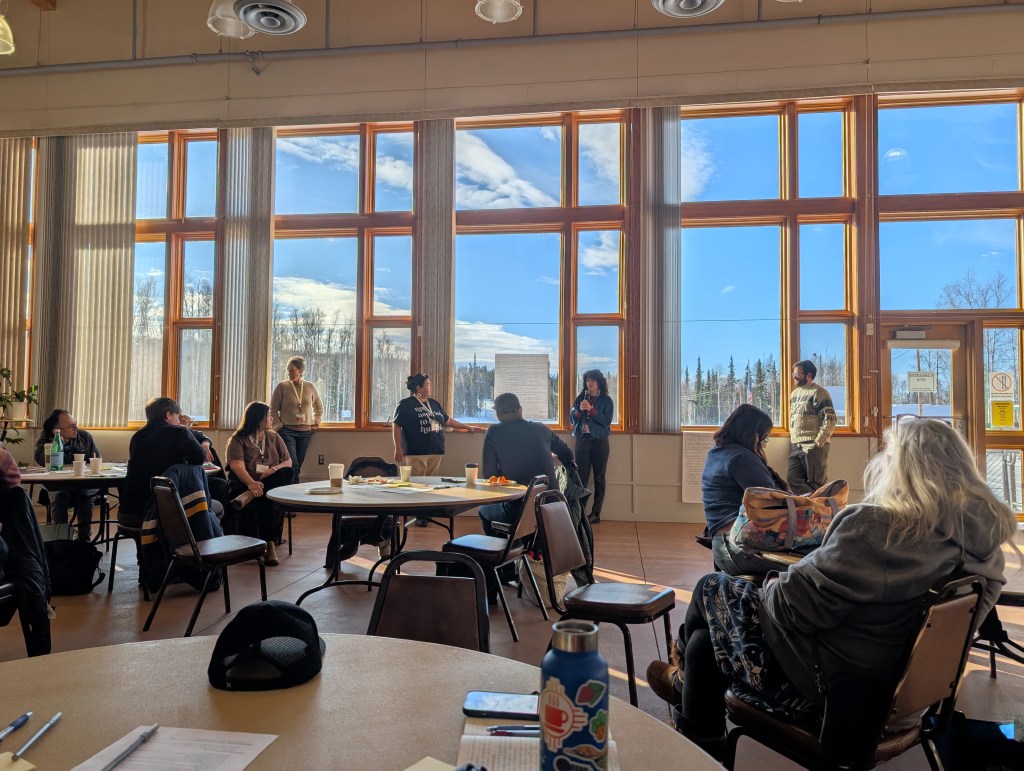
Presentations from government agency staff, tribal groups, University of Alaska researchers, and others highlighted current and upcoming restoration and awareness activities related to Yukon River salmon. Interactive exercises, brainstorming sessions, and break-out groups were facilitated to identify priority topics and issues specific to habitat restoration, and Yukon River salmon population declines.
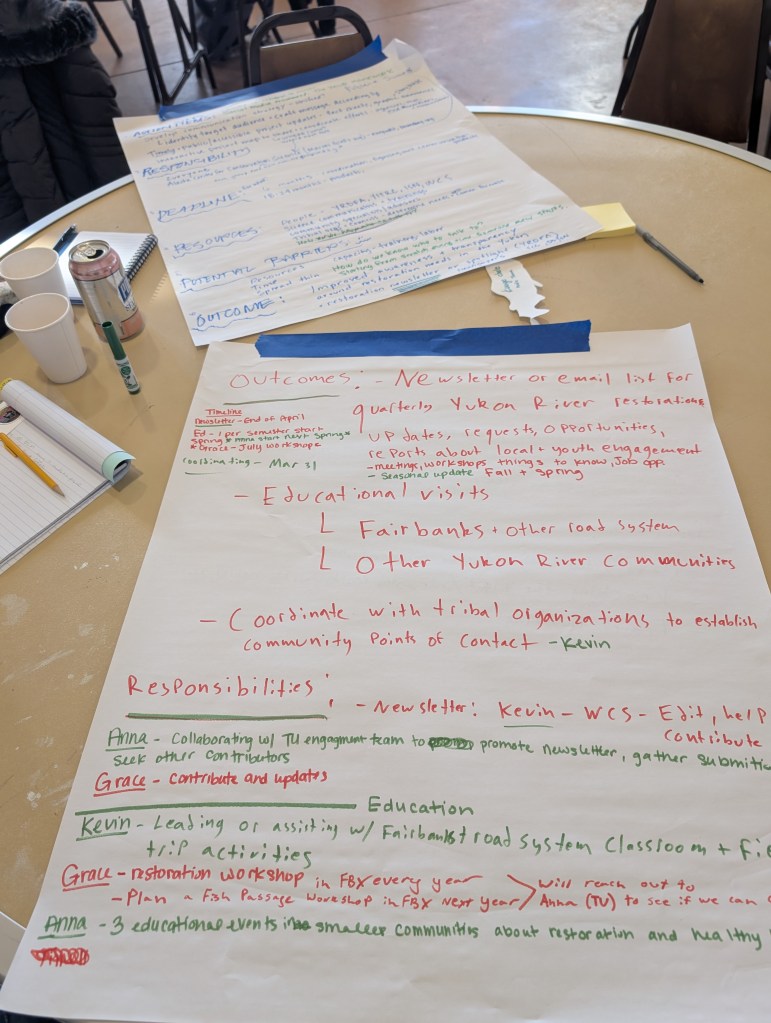
The most impactful output resulting from the summit was the formation of volunteer working groups aimed to tackle priorities and issues identified by the proceedings These groups were intended to live on and gather momentum after the completion of the gathering. They included subsets such as restoration practice and prioritization, outreach and awareness (the group that is producing this newsletter), community action and data sovereignty, and others.
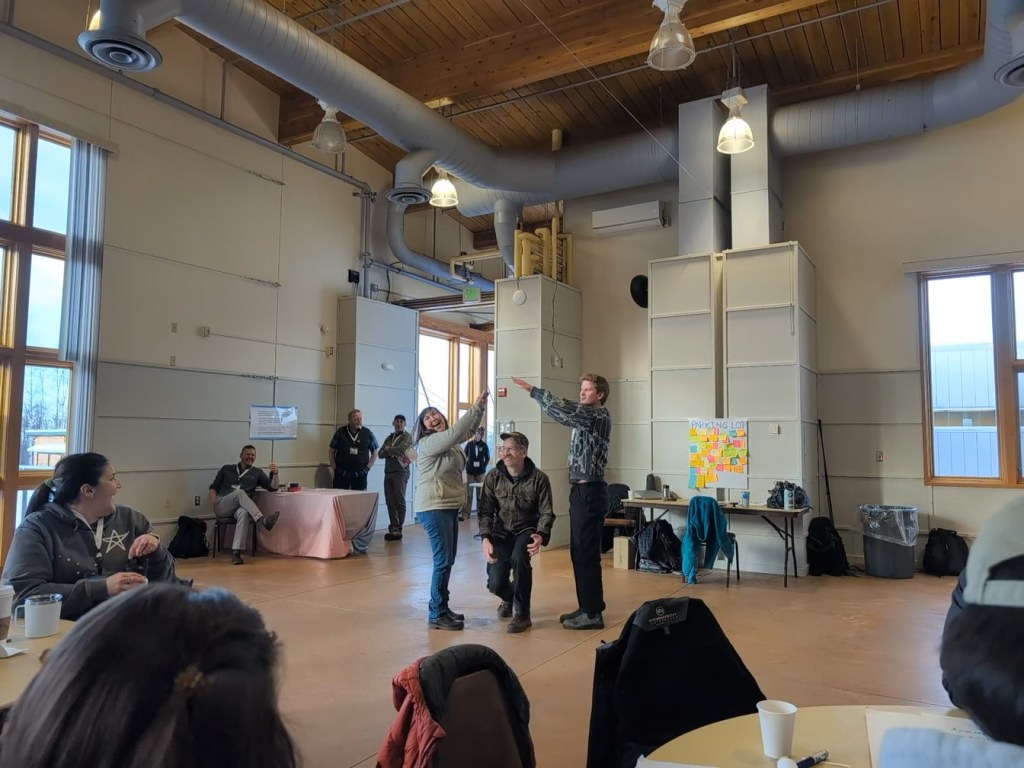
Attendees generally agreed that the summit was incredibly well-organized, productive, fun, and resulted in concrete groups with specific tasks laid out to advance coordination, prioritization, and awareness of aquatic habitat restoration to benefit Yukon River salmon populations. Several attendees shared that the summit instilled in them new hope for a positive outcome for salmon populations, which has been hard to summon for many people who study, celebrate, and rely on these amazing fish that are so important culturally and ecologically to Alaskan and Canadian people.
Contact cory.tvwa@gmail.com for more information about this summit.
 Arctic Beringia Fish Ecology