Recent and ongoing Canadian aquatic habitat restoration efforts in the Yukon River drainage
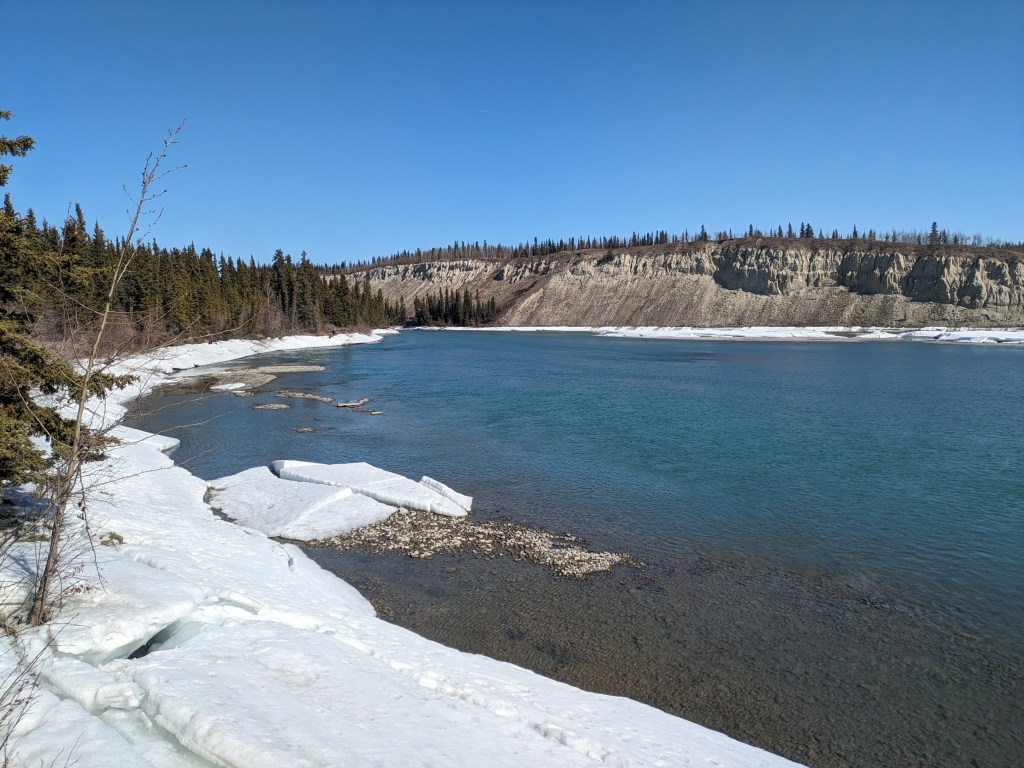
The story of salmon habitat restoration in the Yukon River drainage would not be complete without highlighting recent and ongoing aquatic restoration activities on the Canadian side of the border. The Yukon River headwaters in northern British Columbia and flows for several hundred miles through Canada’s Yukon Territory, passing through the two key cities, Whitehorse and Dawson. Canadian First Nations, governments, and other partner organizations are heavily invested in the status of Yukon River salmon, which represent important subsistence and cultural resources for Canadians.
In response to salmon population declines in recent years, which are attributed to multiple issues in freshwater and marine environments, Canadian organizations invested in the rehabilitation of Yukon River Chinook salmon including Yukon First Nations, Fisheries and Oceans Canada, and the Government of Yukon, are working on a Chinook Salmon Domestic Rebuilding Strategy, which is slated to be completed in March 2026. Working groups for this plan include a habitat data and monitoring facet, a marine issues group, an awareness and education group, and a regulatory group.
Most aquatic habitats in the Yukon River drainage on the Canadian side of the border are natural and not impacted by development, but there are some exceptions. Historic and ongoing placer and hard rock mining activities have left impacts to streams that are important for salmon spawning and rearing. Additionally, some impacts of urbanization affect the drainage and are being mitigated. Some examples of aquatic habitat restoration and rehabilitation in response to these impacts are listed below.
Whitehorse Dump Cleanup
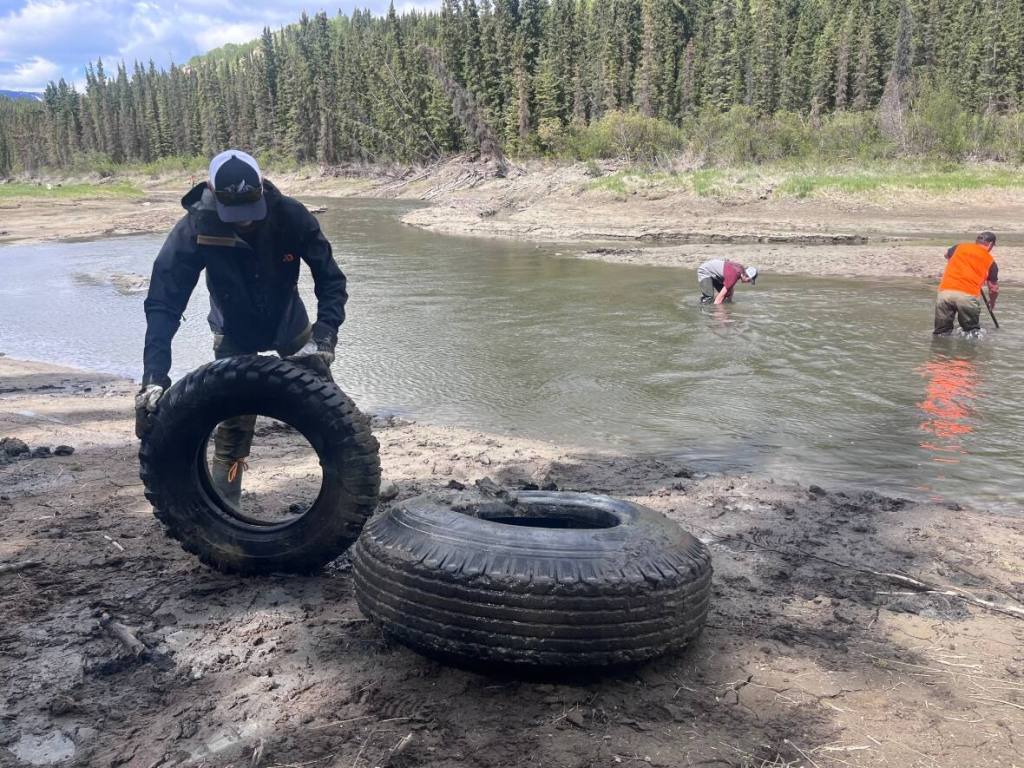
A historic landfill in Whitehorse, Yukon Territory is being eroded by McIntyre Creek, a Yukon River tributary that harbors salmon, causing vehicle tires and other refuse to tumble into the river over the past decade. A team of volunteers has been working during the past several years to remove the tires, scrap metal, and other items from the stream. The garbage is visually unappealing, and may be a source of contaminants (e.g., 6PPD-quinone) that could affect the salmon that inhabit the stream. The Yukon Fish and Wildlife Management Board and Ta’an Kwäch’än Council have participated in these cleanup efforts, along with government agencies, for the benefit of McIntyre Creek and its salmon.
For more information about this project, visit the website here: https://cpawsyukon.org/the-point/
Faro Mine Remediation Project
The Faro Mine was an open pit metals mine in Yukon Territory, Canada that closed in 1998 and left behind massive amounts of tailings and waste rock that is at risk of impacting Yukon River drainage tributaries of importance for salmon, including Rose and Blind Creeks. The Government of Canada is leading efforts to ensure that safeguards at the mine site are intact and it does not impact nearby aquatic ecosystems. This work is in collaboration with the Town of Faro and several Canadian First Nations. Specific actions in the past several years include revegetation of denuded areas to combat erosion and sedimentation, diversion of North Fork Rose Creek to prevent spills of contaminated water and sediment during runoff events, tailings relocation and covering, and work on water treatment systems. This project will be a long-term endeavor, as the environmental risk due to the vast amount of tailings will likely continue in perpetuity.
For more information about this project, visit this website: https://www.rcaanc-cirnac.gc.ca/eng/1480019546952/1537554989037
Emergency Response to Eagle Mine Crisis
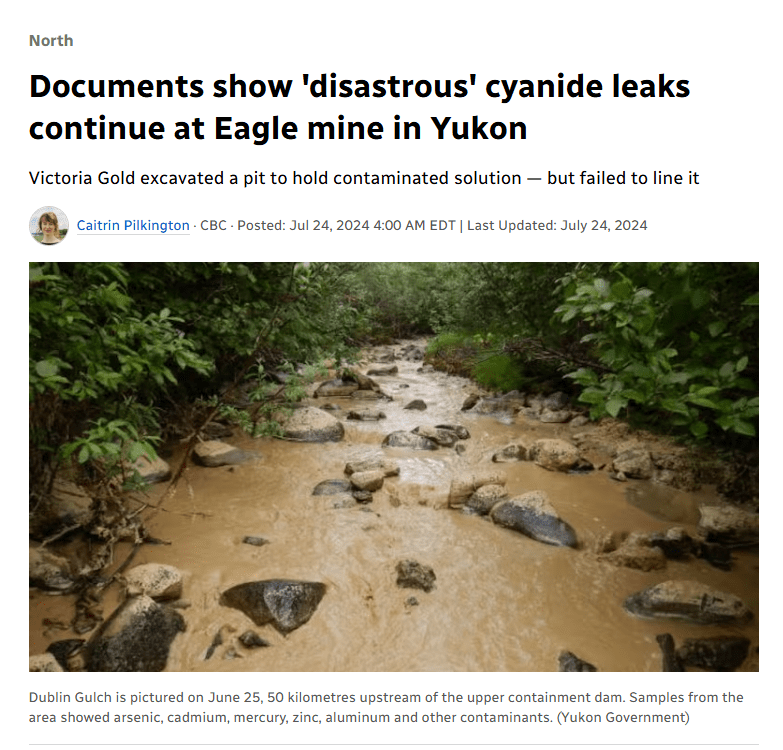
In June 2024, a rockslide damaged infrastructure at the Eagle open pit gold mine near Mayo, Yukon Territory. Massive amounts of cyanide and metals-contaminated water was released into ground and surface waters within the McQuesten River watershed, which ultimately drains into the Yukon River. Fish kills were noted in Haggart Creek, and impacts further downriver are possible, with potential impacts to salmon. From December 2024-February 2025, additional leaks of contaminated waters from holding ponds were noted, adding to existing concerns. As of April 2025, additional risks are present including spring runoff potentially overwhelming storage ponds where contaminated water is being held and treated. Some surface water runoff will be treated by filtering it through hay bales and flocculant, and additional water treatment and management infrastructure will be built. Rehabilitation work at this stage mainly will consist of preventing further releases of contaminated water into ground and surface waters, and attempting to mitigate impacts to fish and other aquatic biota.
Response and cleanup efforts led by the mine is being overseen by the Yukon Government and monitored by First Nations groups, who are very concerned about potential impacts to aquatic and terrestrial landscapes, and their traditional territories and subsistence resources such as salmon. The First Nation of Na-Cho Nyäk Dun has prepared action plans for moving fish or preventing them from entering affected streams, if contamination levels in Haggart Creek reach critical levels. Significant effort towards mitigating the continuing effects of this disaster will occur in 2025, and stream remediation and restoration efforts will likely happen well into the future.
For more information about the remediation efforts, check out this website: https://emergency-response.nndfn.com/
Canadian friends and colleagues: Are we missing anything? Please contact the newsletter editors if you have additional information on these or other aquatic habitat restoration efforts to share, which can be included in our Autumn 2025 edition
 Arctic Beringia Fish Ecology