Research to Action for Yukon River Salmon: Adapting to Climatic, Food-Web, and Habitat Changes
Healthy salmon runs need productive, high-quality habitat in both the ocean and in the watersheds that support spawning and rearing. But habitat restoration is expensive, so where should we focus our efforts to provide the most benefit? Of all the potential actions we could take to improve habitat in the Yukon River Basin, which actions will provide the most bang for the buck in a warming world?
To address these questions, UAF, Yukon River Drainage Fisheries Association, and UAA researchers are working with the Gravel to Gravel team, Tribal organizations, and Yukon River fishing communities to document, quantify, and map the cumulative effects of changes in climate, species interactions, and habitat quality on Yukon River salmon. Their goal is to identify the most effective local and regional actions to support salmon recovery and resilience of salmon-dependent communities. Their work will consider how cumulative effects of warming temperatures, changes in streamflow, species interactions, and habitat quality interact to influence the ability of salmon to recover from their recent population declines.
The team will focus on supporting both agency-led habitat restoration projects, such as culvert replacement and mining restoration, and Tribally-led efforts to revitalize traditional salmon stewardship practices, including seasonal harvest of pike and other salmon predators, and maintaining fish passage along streams influenced by beaver. Incoming UAF Master’s students Raven Dawson and Kristen Reece will be the driving forces on the project.
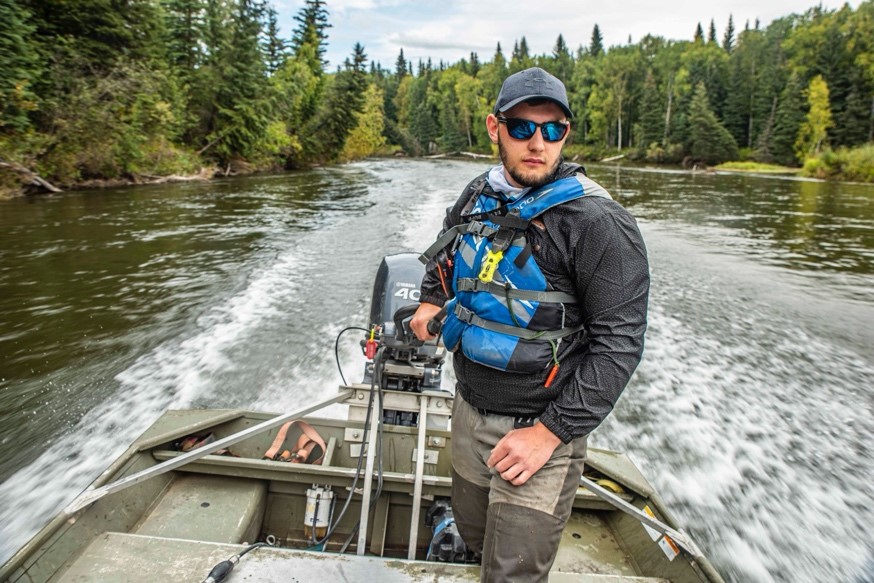
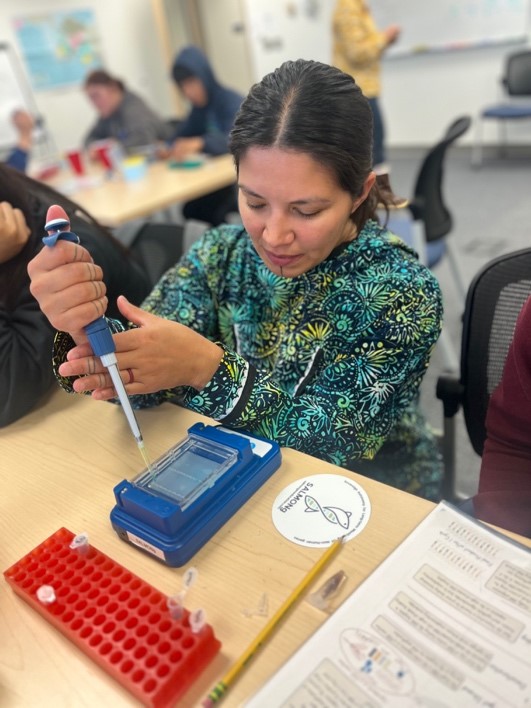
This summer’s work will involve Traditional Knowledge interviews led by Yukon River Drainage Fisheries Association staff and Western Science approaches including environmental DNA, intrinsic potential habitat models, stream temperature models, and lots of good old-fashioned fish sampling with rod-and-reel, nets, and minnow traps. Partners include the Yukon River Inter-Tribal Fish Commission, Tanana Valley Watershed Association, US Geological Survey, Bureau of Land Management, US Fish and Wildlife Service, and Alaska Department of Fish and Game. The 3-year project is funded by the Alaska Climate Adaptation Science Center.
Contact eschoen@alaska.edu with any questions or inquiries about this project
 Arctic Beringia Fish Ecology