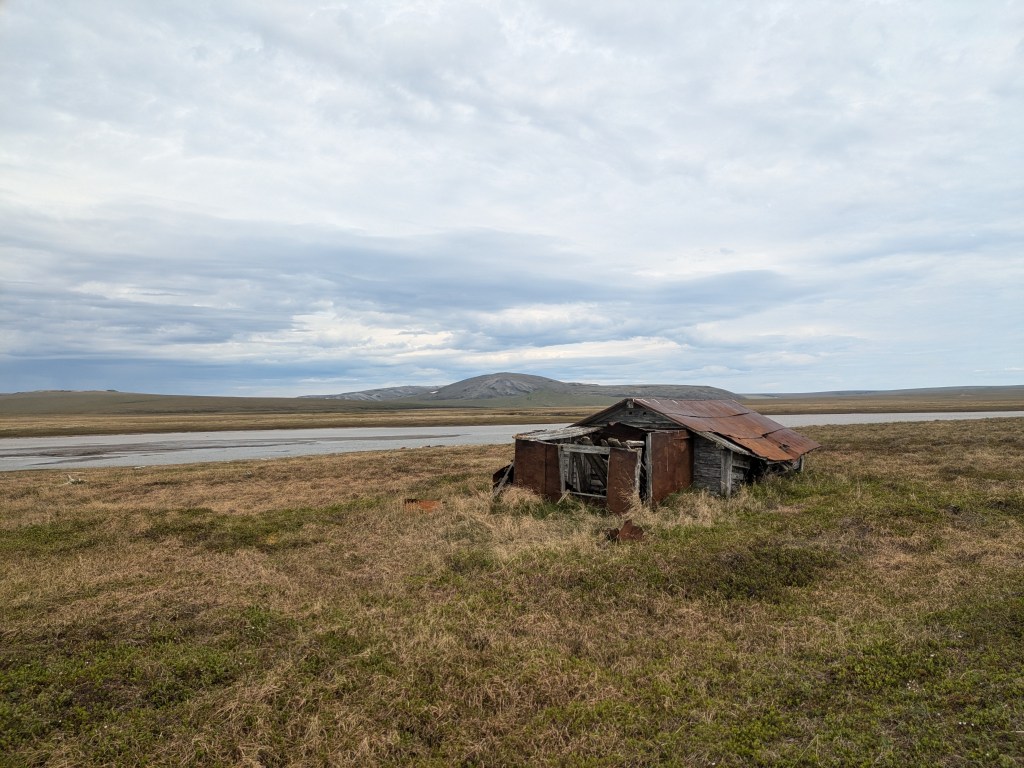
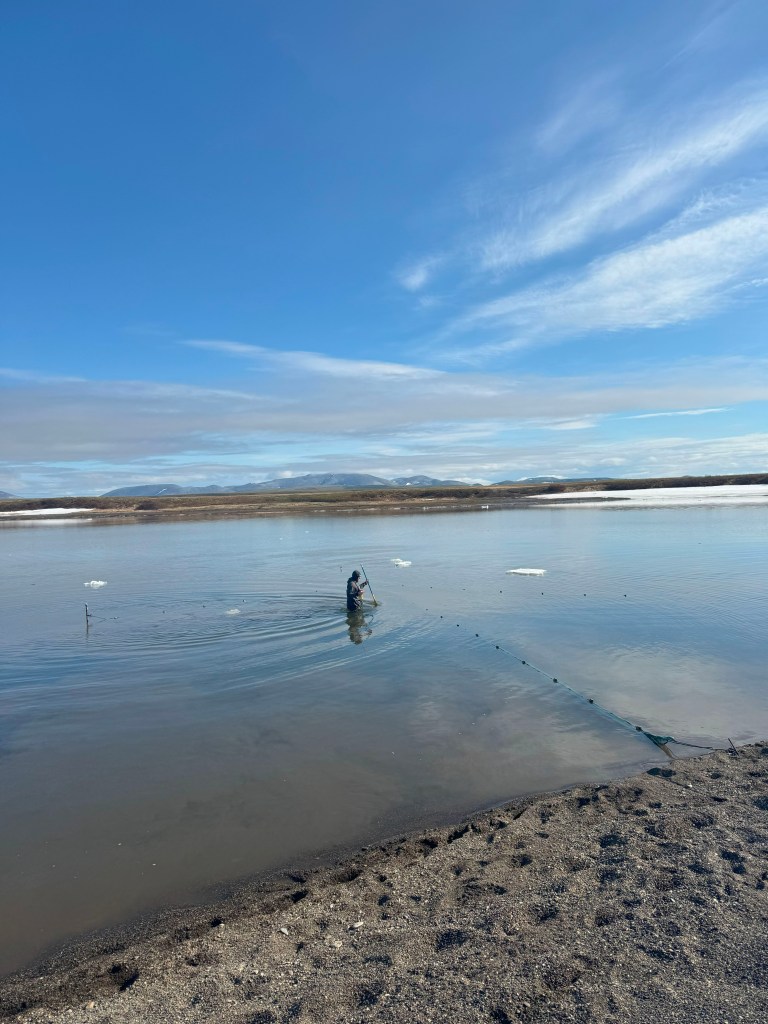
During summer 2024, one visit to Cape Krusenstern National Monument coastal lagoons was undertaken by WCS to continue our long-term monitoring project with the National Park Service and Native Village of Kotzebue. WCS Fish Ecologist Kevin Fraley and a technician flew via bush aircraft from Kotzebue, AK to Cape Krusenstern National Monument and conducted fish and water quality monitoring at five coastal lagoons in mid-late June.
Coastal lagoons in Northwest Alaska are important subsistence fishing areas for Indigenous and rural residents, who depend on fish harvest for food security. Because of the dynamic nature of these lagoons, fish abundance and species diversity changes noticeably between seasons and years. This is due to natural environmental and fish life history patterns, but also appears to change over time due to climate change effects. Thus, tracking environmental variables and fish abundance and diversity over time is critical to monitor and identify ecosystem changes that could affect subsistence fisheries
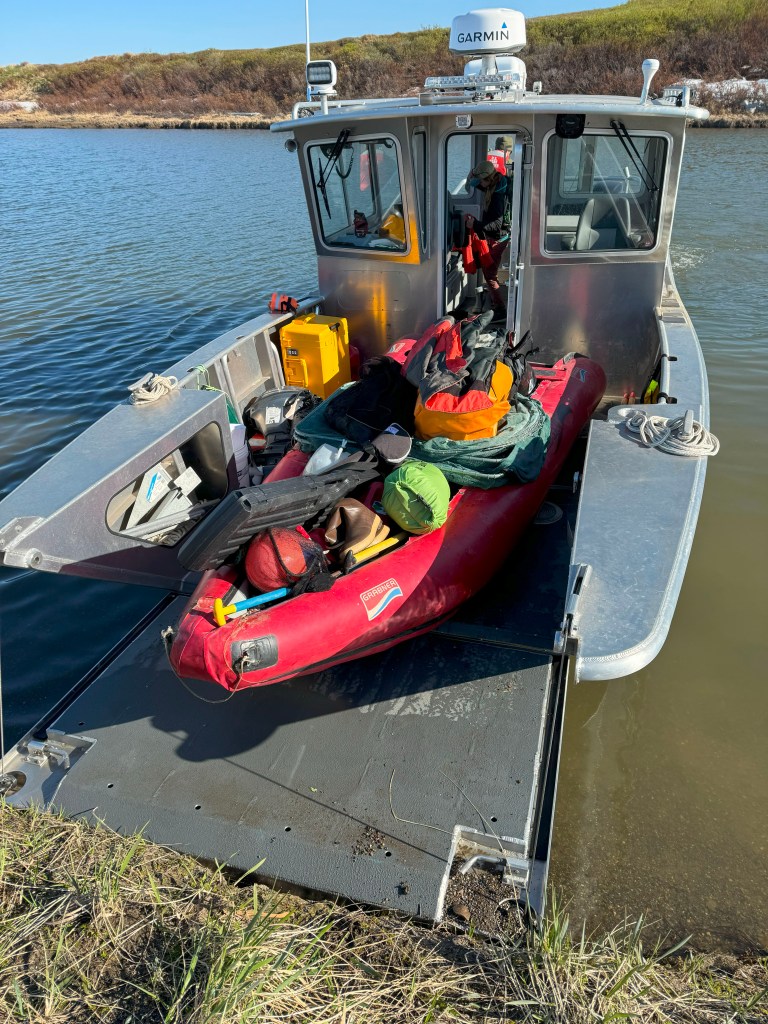
During the time that we were in the field, NPS staff were visiting the Anigaaq Ranger Station, and we spent time with them and accompanied them on a trip towards Krusenstern Lagoon in their new landing craft, to facilitate access to our sampling sites.
For this fieldwork, three lagoons commonly visited for the monitoring program were sampled, as well as some additional locations. We were able to visit Tasaychek Lagoon, which is not often sampled because of the need for good weather along the coast to access it via small inflatable boat. We also visited and sampled Atiligauraq Lagoon nearby, which had not been sampled since 2016 (similarly because of its remote location along the coast). Surprisingly, there were large numbers of humpback whitefish and least cisco in this small lagoon.
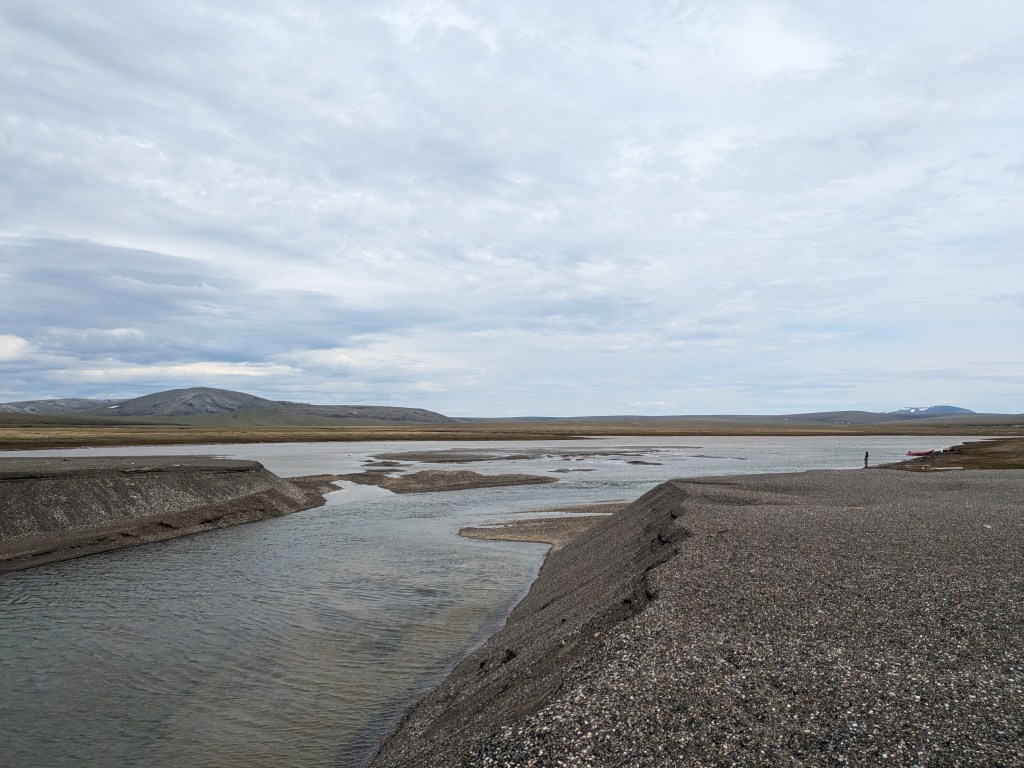
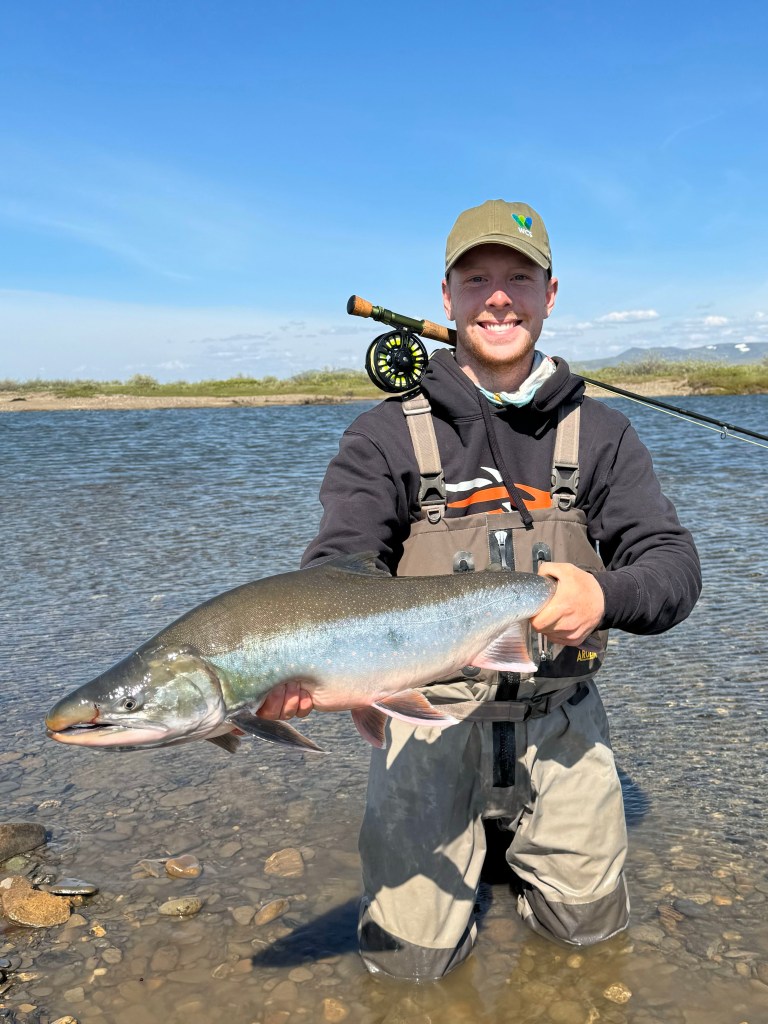
Largely, the weather was good for this trip despite some cold and windy days. Patches of snow and ice were present at the beginning of the trip, but mostly melted off by the time we departed. The initial colder temperatures kept the mosquitoes at low abundance, which was advantageous for sampling. Overall, fish abundance was lower than usual at most sites. However, Dolly Varden and Bering cisco were more prevalent than in previous years. Both of these species are prized subsistence harvest resources, particularly Bering cisco, which we have found to be particularly rich in lipids and proteins.
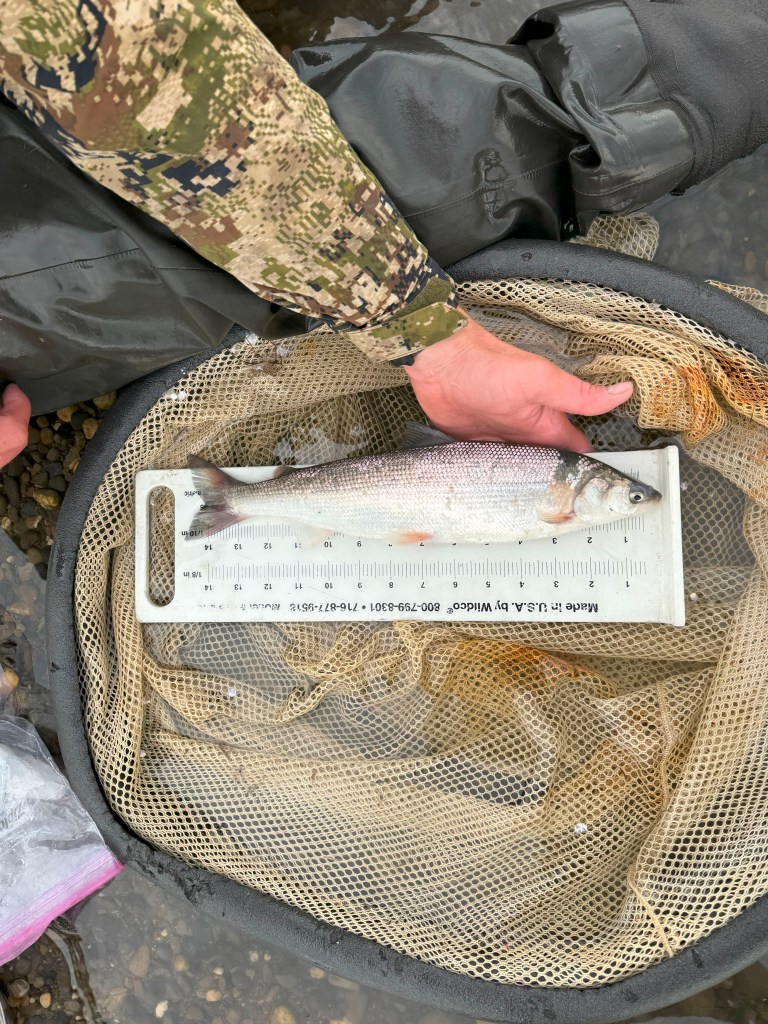
In addition to the aforementioned lagoons, we also visited the Rabbit Creek/Imik Lagoon outlet and found large numbers of Dolly Varden, humpback whitefish, and a lone sheefish (inconnu). Typically, sheefish are not seen this far away from Kotzebue Sound, where the bulk of the population resides (but see our ongoing research project examining sheefish coastal movements). Surprisingly, we did not catch sheefish in any of the more southerly lagoons during this trip, which is of interest to subsistence fishers as this species is an important food resource and is typically present in the lagoons during this early summer season.
Interestingly, saffron cod and starry flounder were particularly abundant during this visit, though pond smelt and stickleback species were scarce. Musk oxen were seen near the Anigaaq airstrip, and many species of waterbirds, but grizzly bears and other large mammals were not spotted during this trip.
Next Steps
If support from the National Park Service and Native Village of Kotzebue for Northwest Alaska coastal lagoon monitoring efforts is continued, WCS intends to return to either Bering Land Bridge National Preserve or Cape Krusenstern National Monument in 2025, and alternately visit these two parklands yearly, into the future.
 Arctic Beringia Fish Ecology
Leave a comment