February Trip
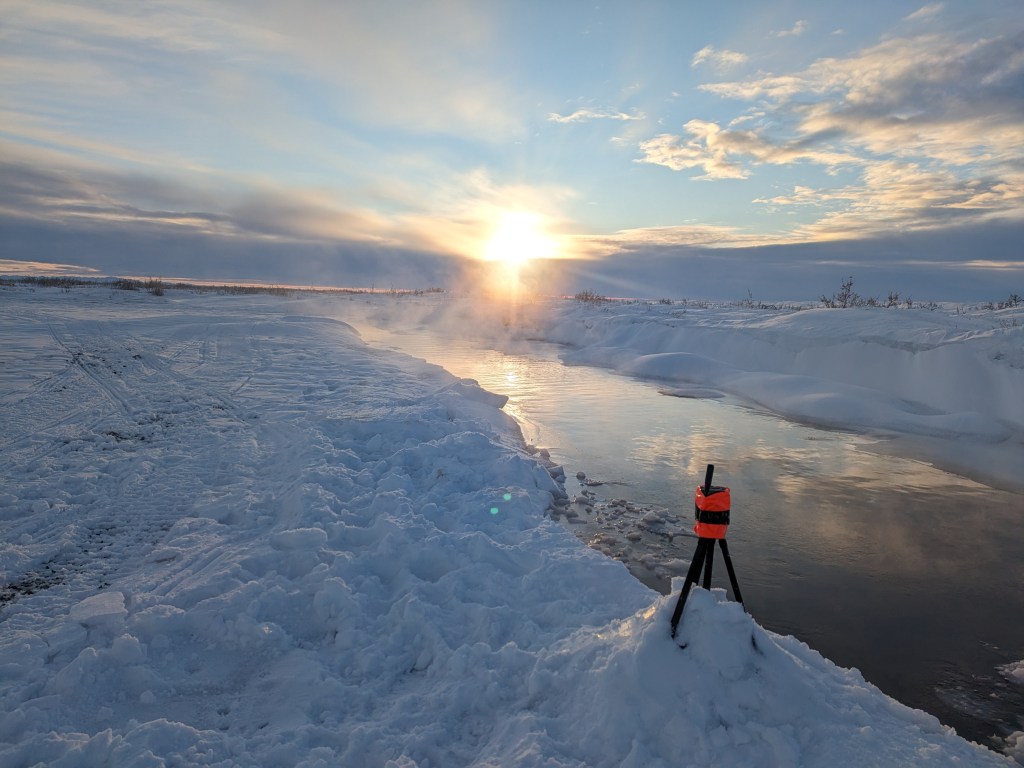
In February 2024, WCS Fish Ecologist Kevin Fraley and two Alaska Department of Fish and Game Division of Sport Fish staff members traveled to the Shaviovik River spring site where WCS personnel had witnessed a mass fish dieoff during the winter of 2021-2022. To build on observations and data from that initial discovery, dissolved oxygen (DO) loggers were temporarily installed in the spring where Arctic grayling and Dolly Varden spend the winter. The equipment tracks the dissolved oxygen and temperature levels of the water to see if they get to concentrations that may be stressful or lethal for fish. Additionally, motion-detection cameras were set at the sites to document ice conditions and terrestrial scavenger activity.
DO loggers were deployed at the site during the winter of 2022-2023, and we were glad to see that a mass dieoff did not occur. We traveled to the spring in February 2024 to reinstall this equipment and gather more data.
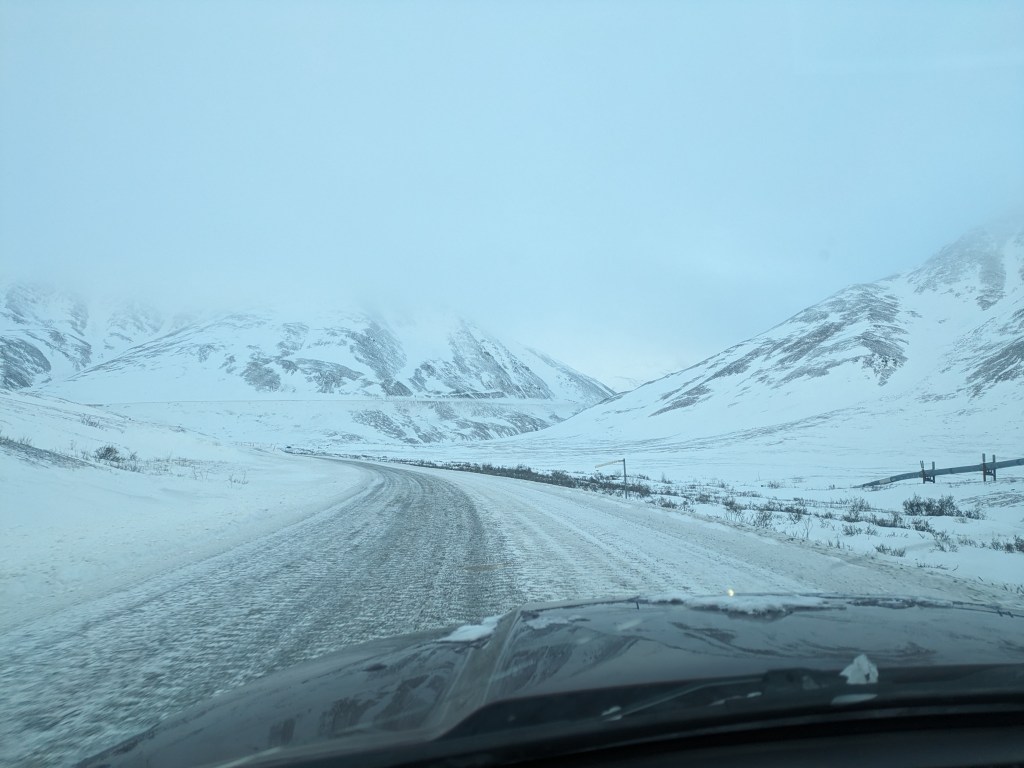
Conditions were cold for the February trip, with forecasted highs of -15 F. During the previous several weeks, temperatures in the area had gone down to -50 F, so we were interested to see how this cold snap may have affected ice and dissolved oxygen at the fish overwintering site
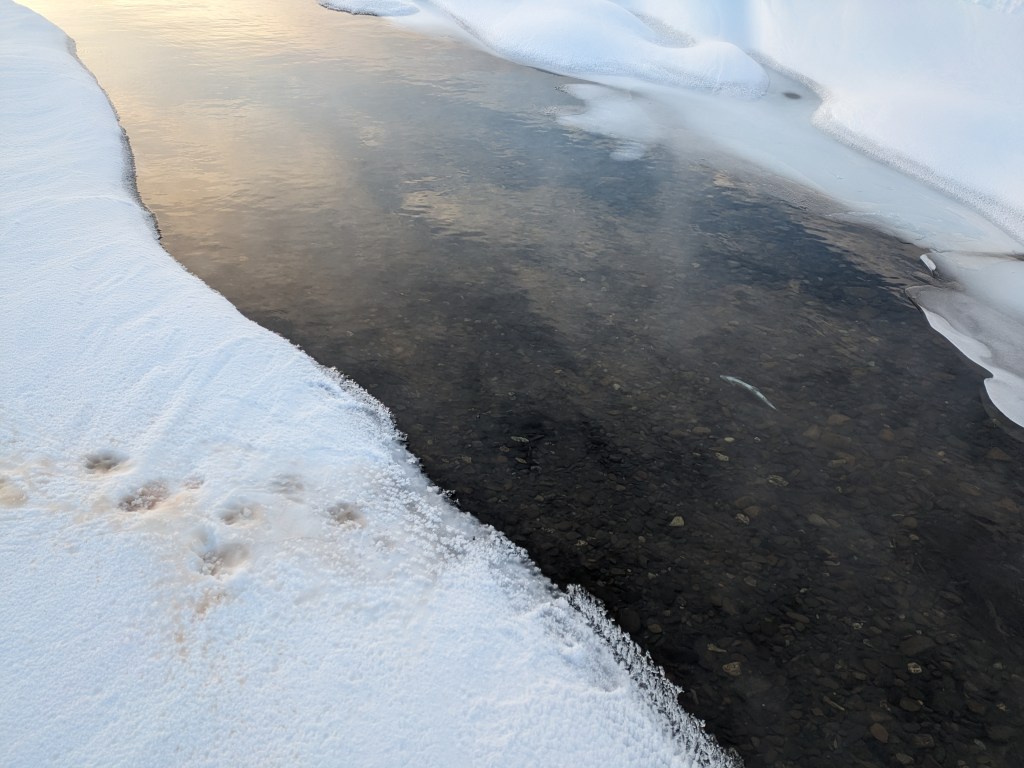
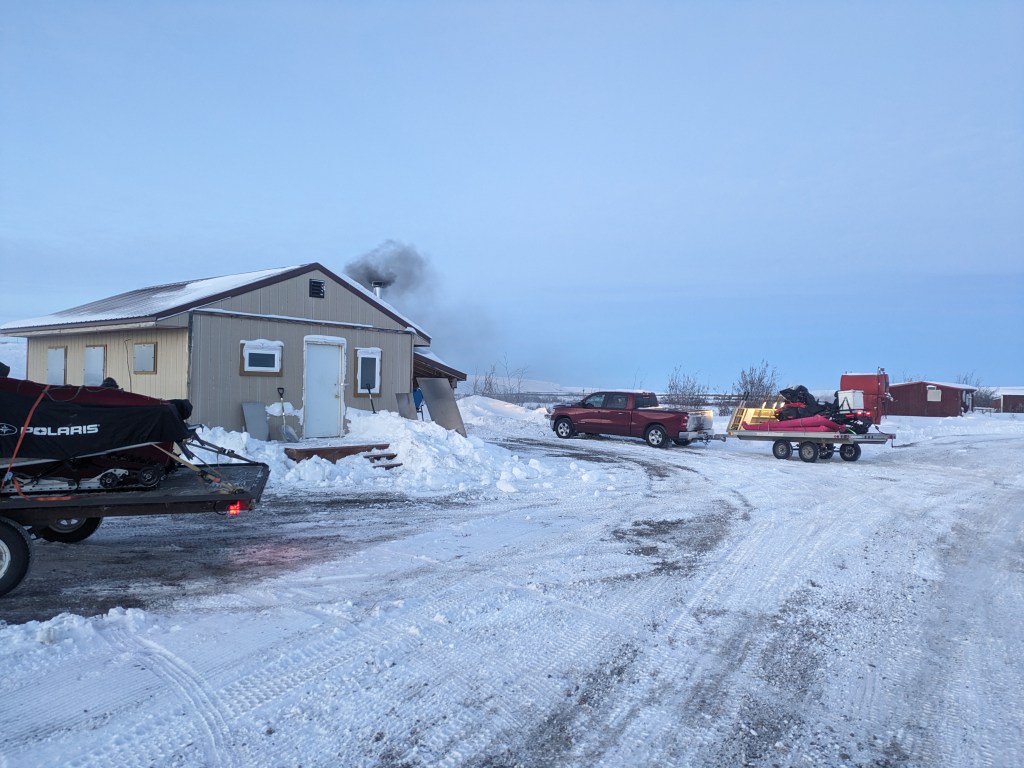
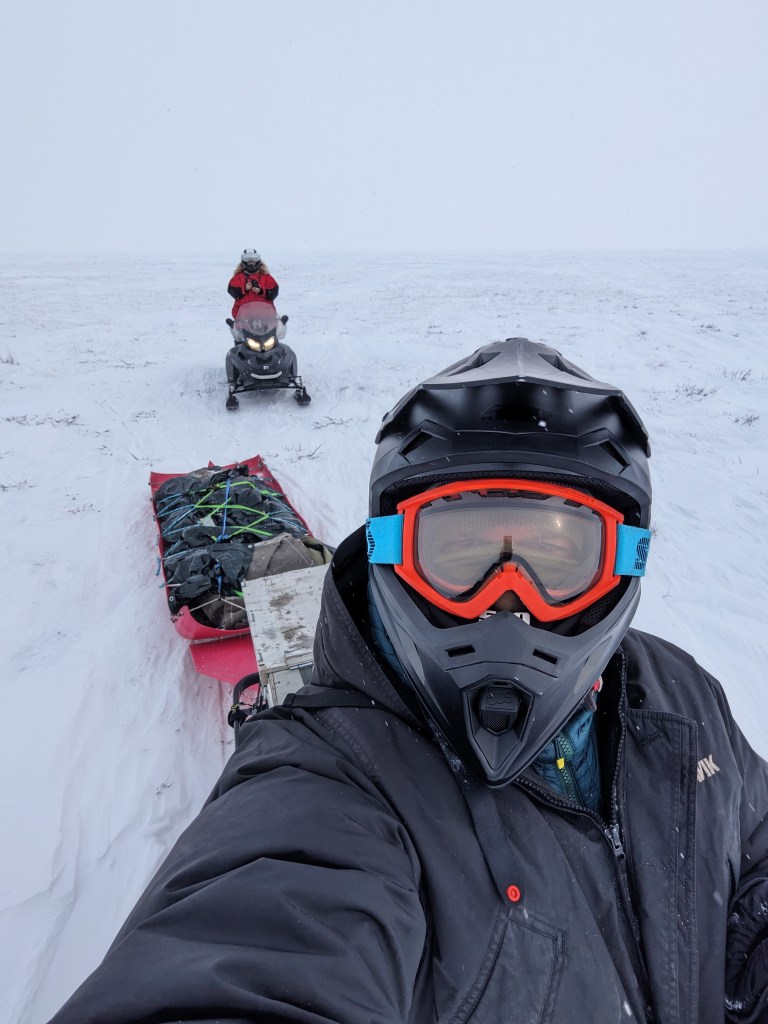
Despite the relatively cold temperatures for snowmobiling, we were able to reach the site with no incident. We found the spring area had open water, and noticed a few dead grayling and some wolverine tracks entering or exiting the water. We also noticed dozens of live grayling and Dolly Varden swimming around in the shallow water
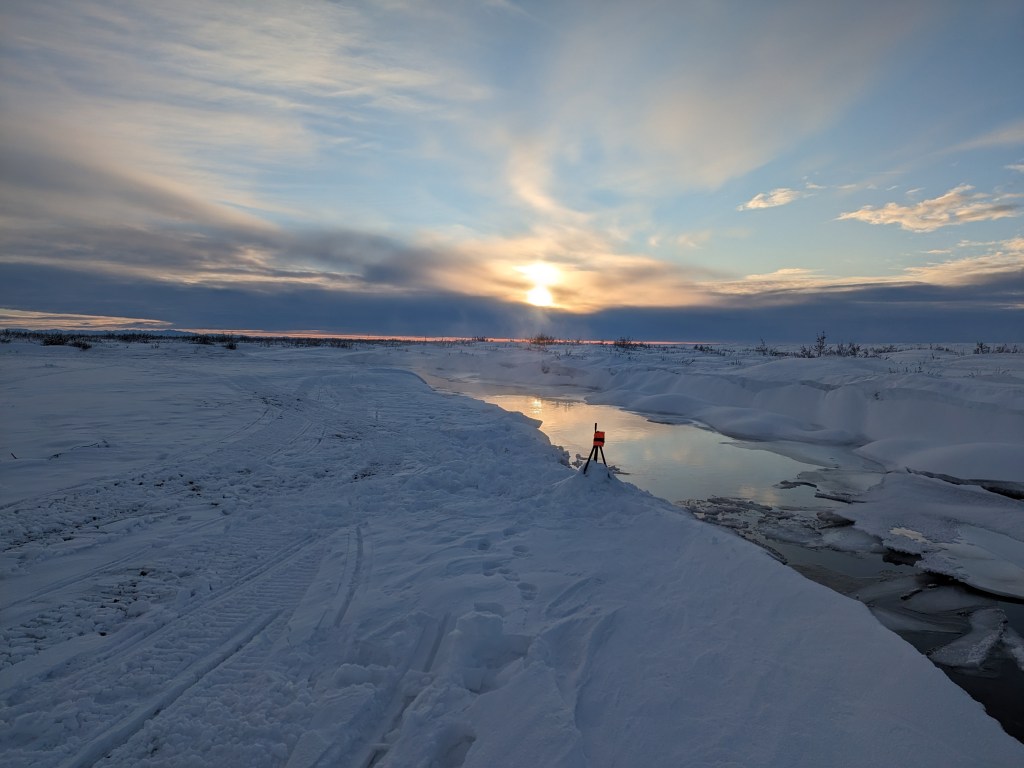
Dissolved Oxygen loggers and motion-sensing cameras were installed. As we worked, we observed a wolverine watching us from a hillside about 200 yards away. We collected three dead graying from the spring to use for later analyses, then snowmobiled back to our vehicles at the Dalton Highway.
April Equipment Retrieval
Fish Ecologist Kevin Fraley and WCS staff member Kayla Shively returned to the spring site in early April via the Dalton Highway and snowmobile. We planned to retrieve the DO monitors and cameras, assess any fish mortality, and attempt to collect some additional fish samples.
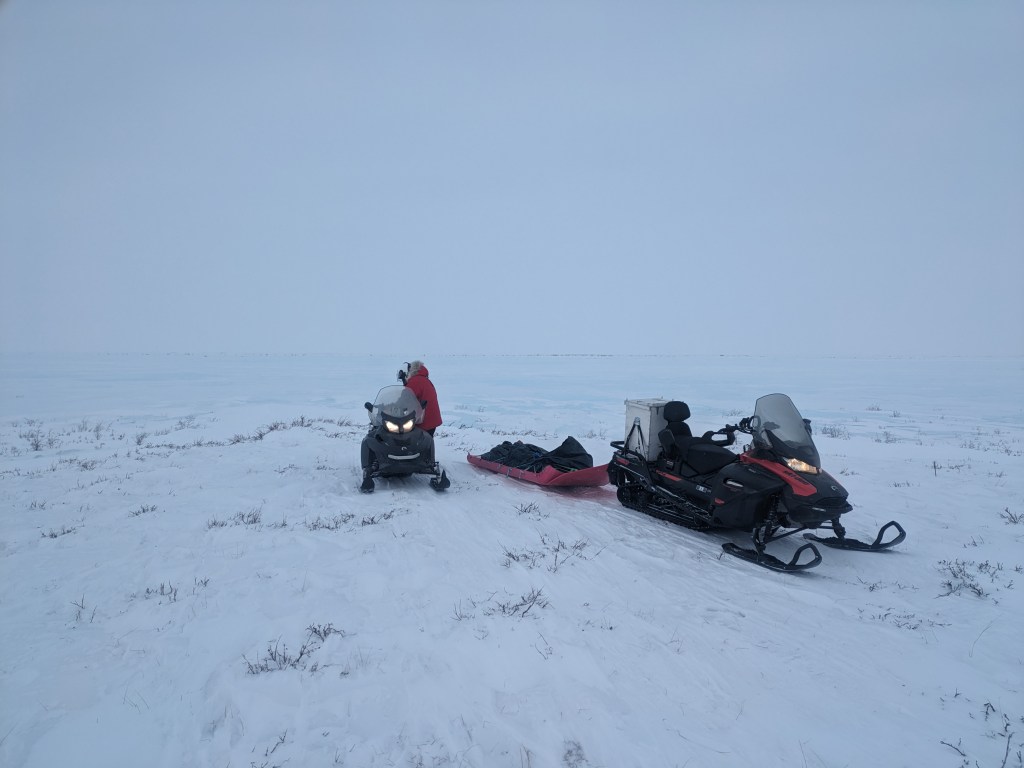
Temperatures during this trip were just below 0 F, though there were moderate winds and some fog to deal with. However, we made it to the spring without any trouble. Despite fairly warm temperatures over the previous weeks (much warmer than when the spring exhibited open water in February), the fish overwintering area was entirely covered in thin ice.
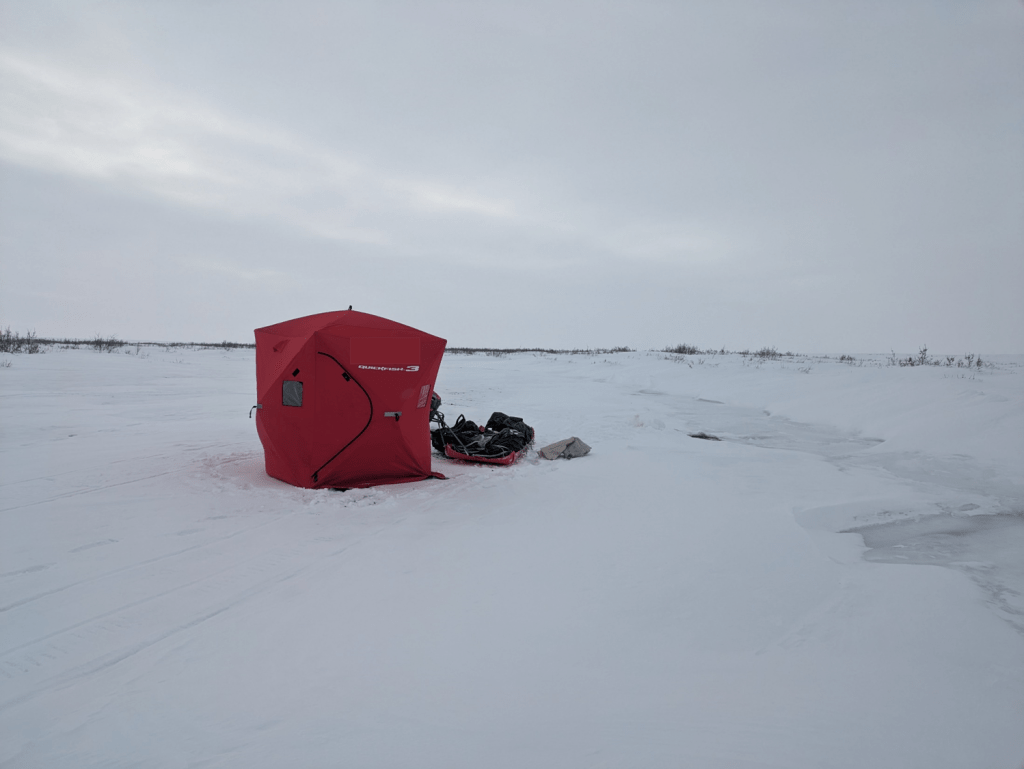
We set up an ice fishing shelter with a propane heater, and used an underwater ROV to retrieve the dissolved oxygen loggers underneath the ice. We also took down the motion-detection cameras. With the ROV, we observed hundreds of live Arctic grayling packed together in the overwintering channel, and a few Dolly Varden. There were less than 5 dead fish observed, so it appeared that a fish dieoff would not occur this year, despite the full ice cover. Although, the fish in the spring would have approximately a month and a half of winter conditions still to get through before open water season.
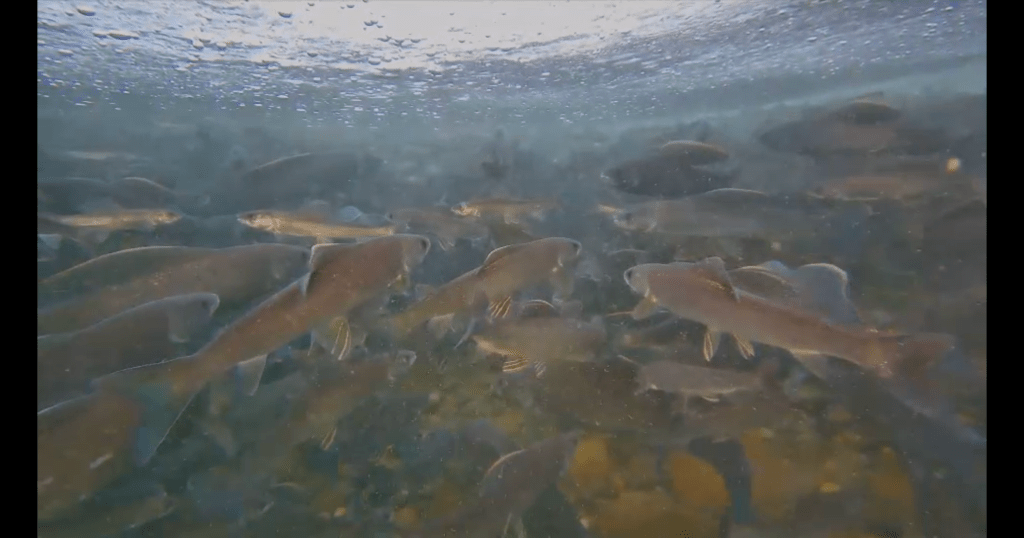
We installed a tangle net through the ice and were able to collect enough Arctic grayling to fill our allowance under an ADFG Aquatic Resource Permit, for later analyses. After all the work was done, we returned to the road via snowmobile.
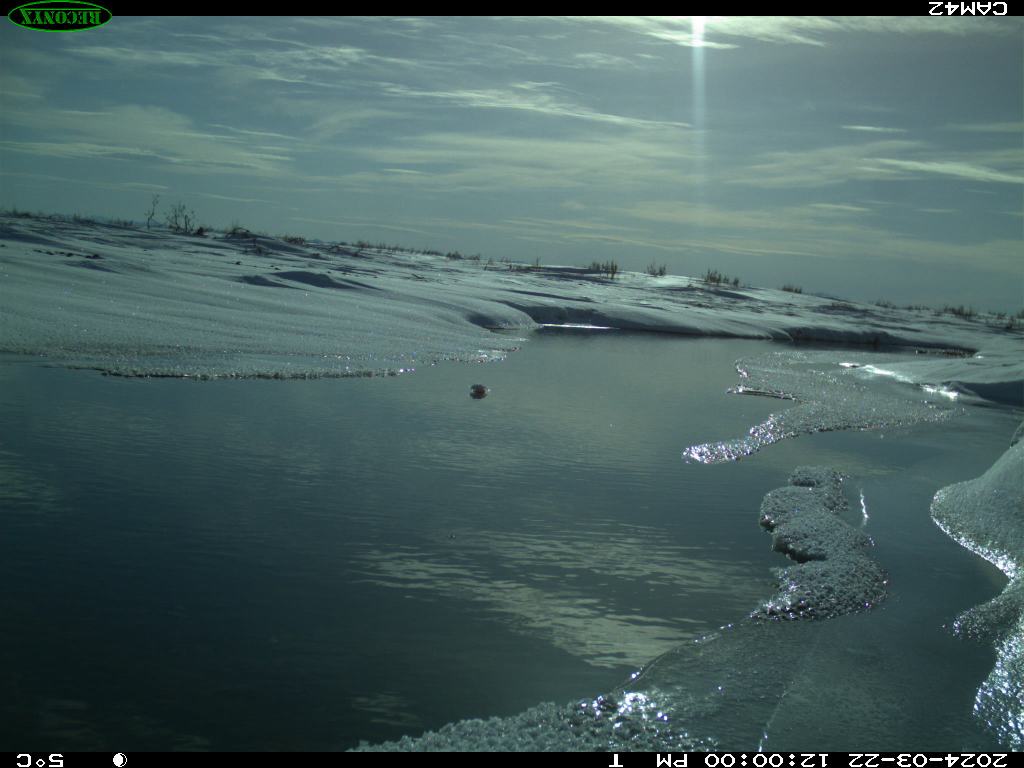
Preliminary results showed that dissolved oxygen stayed low, but stable in the overwintering channel from Feb-April. This was in contrast with the previous year, where DO levels got very low during certain periods. Unfortunately, the main motion detecting camera malfunctioned and did not return any images. However, a secondary camera in a nearby side channel gave good time lapse images of ice conditions and outside temperature during the period.
Next Steps
We hope to continue work at this site in future winters to better-understand fish winter ecology on Alaska’s Arctic Slope, and monitor for mortality events. Data from the last two seasons of fieldwork will be organized and compiled. Additionally, we plan to run otolith analyses on the grayling collected to ascertain how often the fish experienced hypoxic episodes throughout the course of their lives. Stay tuned for possible follow-on work in winter 2024-2025!
 Arctic Beringia Fish Ecology
Leave a comment