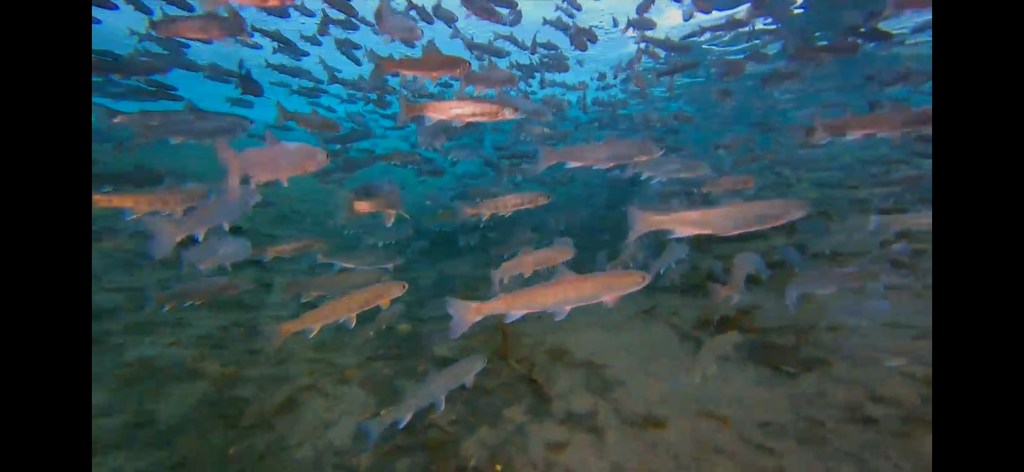
In early May, a WCS team returned to the site of a fish mass die-off that occurred in 2022, to retrieve water quality monitoring equipment that was placed in December 2022 and ascertain if fish mortality had again occurred. The crew took snowmachines from Franklin Bluffs along the Dalton Highway to and from the fish overwintering site, and the Kavik River Camp for lodging.

Using an underwater ROV deployed through a hole cut in the river ice, moorings that held water monitoring equipment were retrieved and the status of overwintering fish was observed.

The crew was glad to observe that no fish dieoff had occurred, despite dissolved oxygen readings dropping down to less than 30% saturation during the winter (normal values are close to 100%). Hundreds of live Dolly Varden and Arctic grayling were observed in the pool that is kept from freezing to the riverbottom by an upwelling spring.
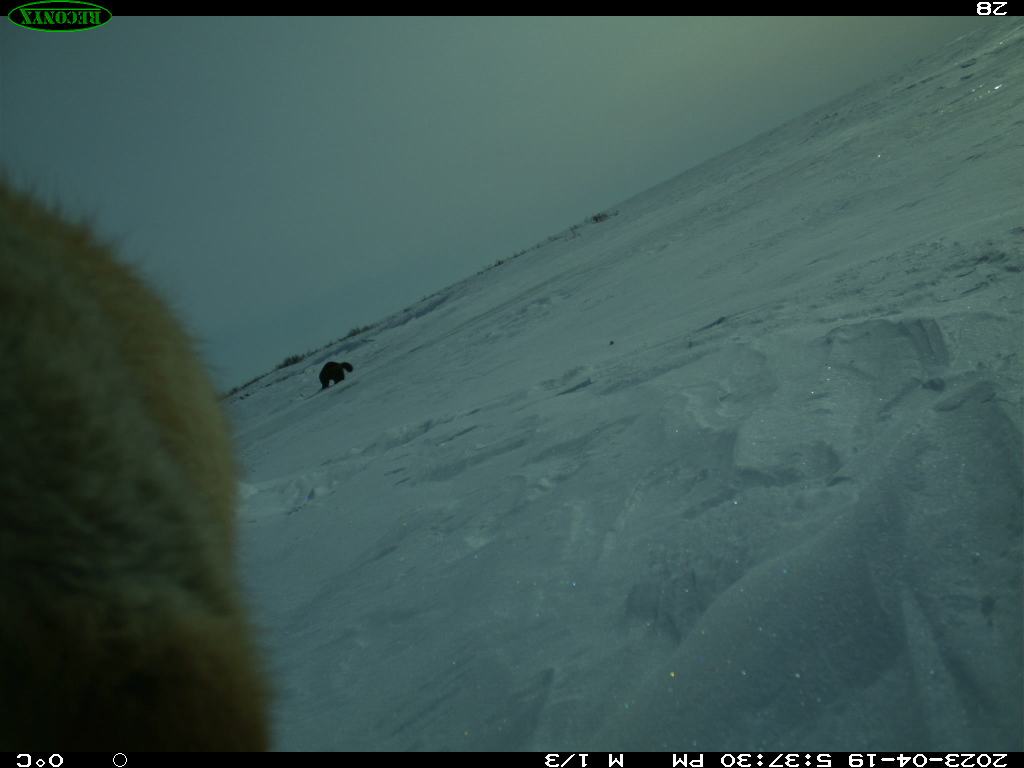
Despite a lack of dead fish available for scavengers, game cameras revealed that wolverines and foxes visited the site often, perhaps to drink the unfrozen water or to investigate the scene where many dead fish were available to eat the prior winter.
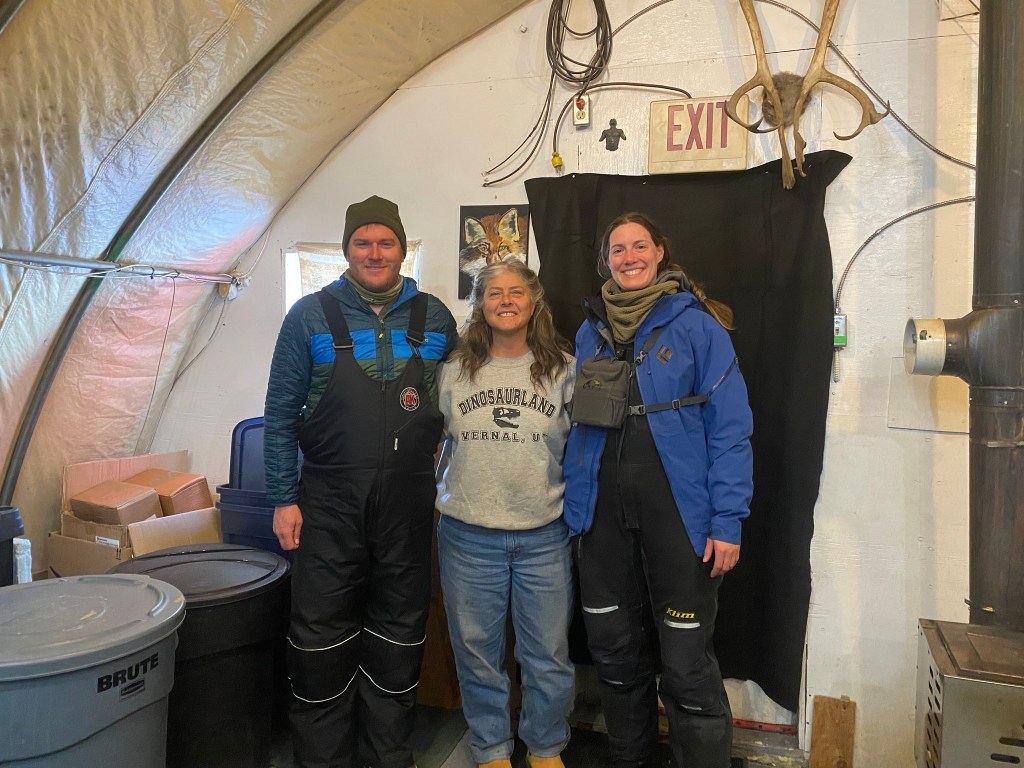
Sue Aikens at Kavik River Camp was an excellent host, and it is always a pleasure talking with her about her wildlife and ecological observations around the area.
It is uncertain whether funding will be available to allow further monitoring at this site, but it is important to ascertain how often fish die-offs occur in Arctic Slope springs, so every effort will be made to continue the work.
Interested in additional info? Read more about this project here and check out the blog post from our fieldwork in December 2022
 Arctic Beringia Fish Ecology
Leave a comment