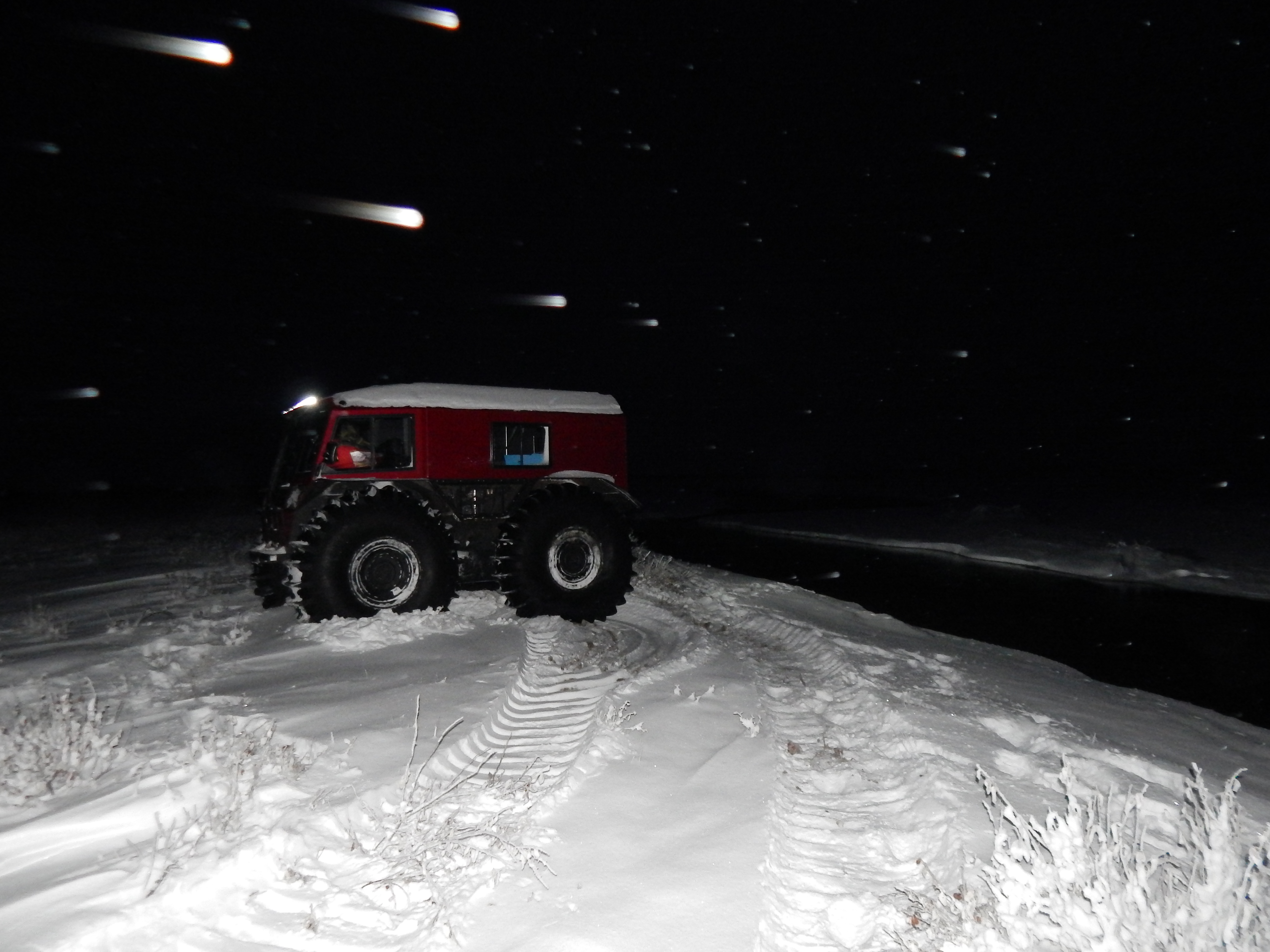
Winter 2022-2023 Arctic Slope Fish Ecology Fieldwork
Background
In April 2022 (late winter), the tracking of scavenging activities of a GPS-collared wolverine on Alaska’s North Slope led WCS researchers to a macabre scene in an ice-encased river pool. More than 100 overwintering Arctic grayling and Dolly Varden had perished and their carcasses lay scattered on the river bottom or trapped in ice. This led us to wonder, what had happened to cause this fish die-off, would it happen again, and what might the impact of these die-offs be on fish populations of this and other North Slope rivers where similar events may occur?


December 2022 follow-on fisheries fieldwork
To investigate the possible causes of the fish die-off, to see if this may be an annual occurrence, and to assess the importance of fish mortality events for terrestrial scavengers, WCS Fish Ecologist Kevin Fraley returned to the site in December 2022.
Sue Aikens, owner and operator of Kavik River Camp, graciously provided transportation, room, and board to facilitate access to the fish die-off site.

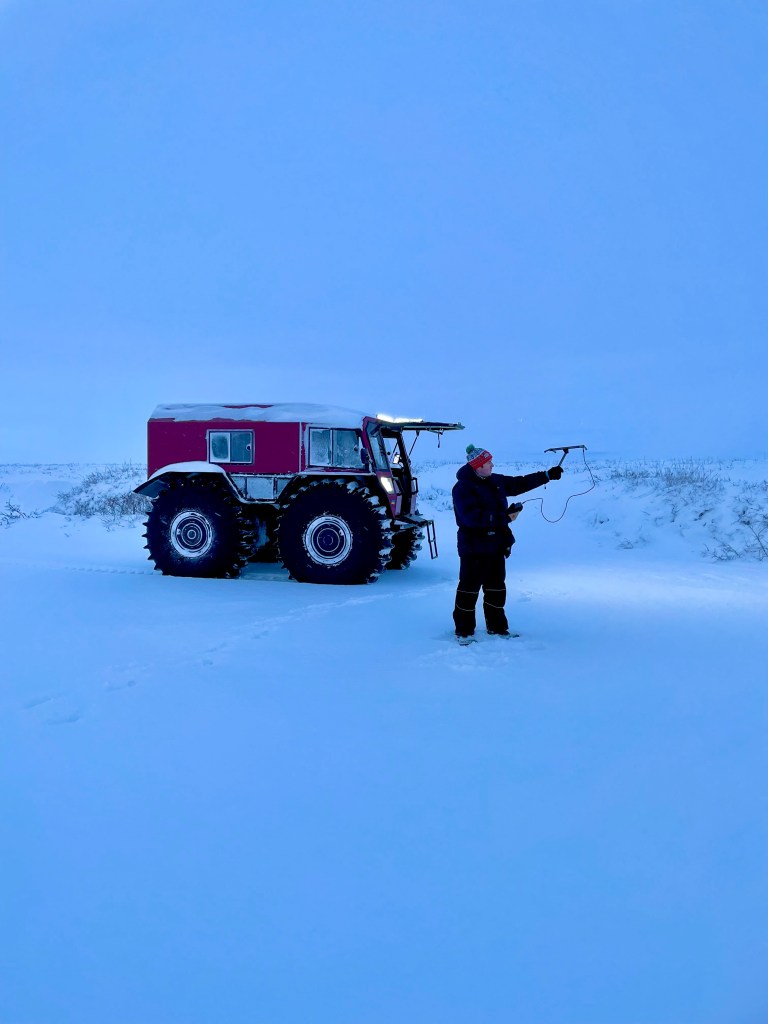
To visit the site on the Shaviovik River approximately 20 miles away, Sue piloted us across the frozen, snowy tundra in her Sherp, a vehicle with very low tire pressure designed to avoid damage to the landscape.
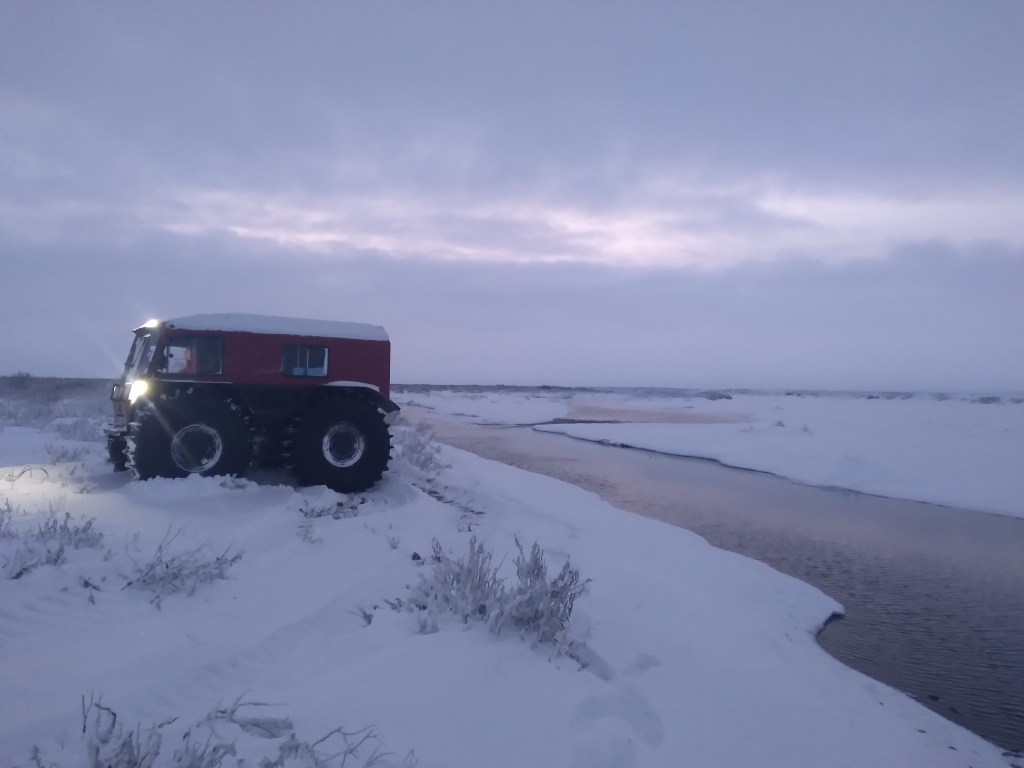
At the site of the fish die-off, open water prevailed, despite adjacent sections of river being frozen. Groundwater upwellings in this area produce warmer water that allows for open water later into the winter, which provides pockets of fish overwintering habitat (river ice doesn’t freeze to the gravel bed). Published scientific literature asserts that these localized, scattered upwelling spring complexes provide the best, and sometimes the only, overwintering habitat for fish in most rivers on Alaska’s North Slope.
When we arrived at the pool in which the overwintering mortality had occurred, we placed dissolved oxygen and temperature recording equipment in the stream to monitor water quality throughout the winter. WCS researchers will return to the site in April 2023 to remove the equipment and collect the monitoring data. For purposes of comparison, water quality equipment was also installed in a separate fishless reach ~200 yards from the mortality pool, known from previous visits to stay unfrozen throughout the winter.
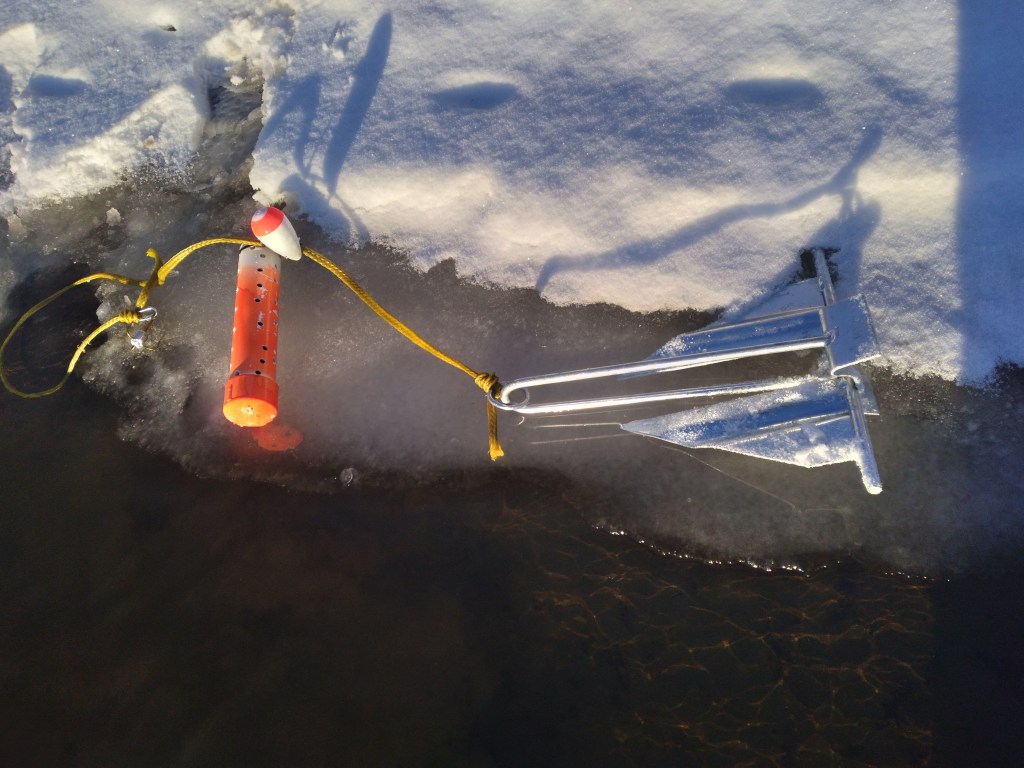
Instantaneous water quality parameters including dissolved oxygen, temperature, conductivity, turbidity, and salinity were collected and recorded. Water was approximately 37 degrees Fahrenheit, and dissolved oxygen was lower than expected at ~58% saturation in both fishless and fish overwintering stream reaches. Typically, cold, clear water open to the air is 90% saturated or higher. The low readings may indicate the groundwater upwelling source is already oxygen-poor, and hypoxia will become more severe in late winter when surface ice closes the air-water interface. Hypoxia is assumedly the leading stressor that caused the fish die-off. However, other factors such as disease, starvation, and high barometric pressure under the ice could be contributors. Results from the monitoring equipment, plus any observations of further fish mortality in April 2023, should provide some answers to this mystery.
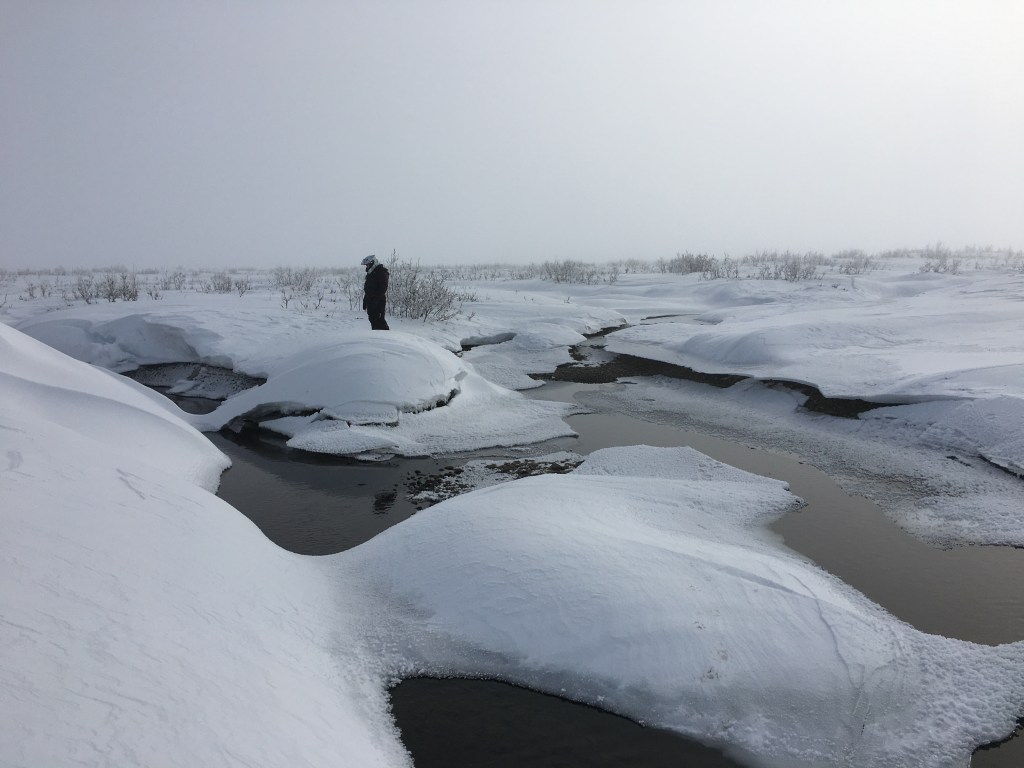
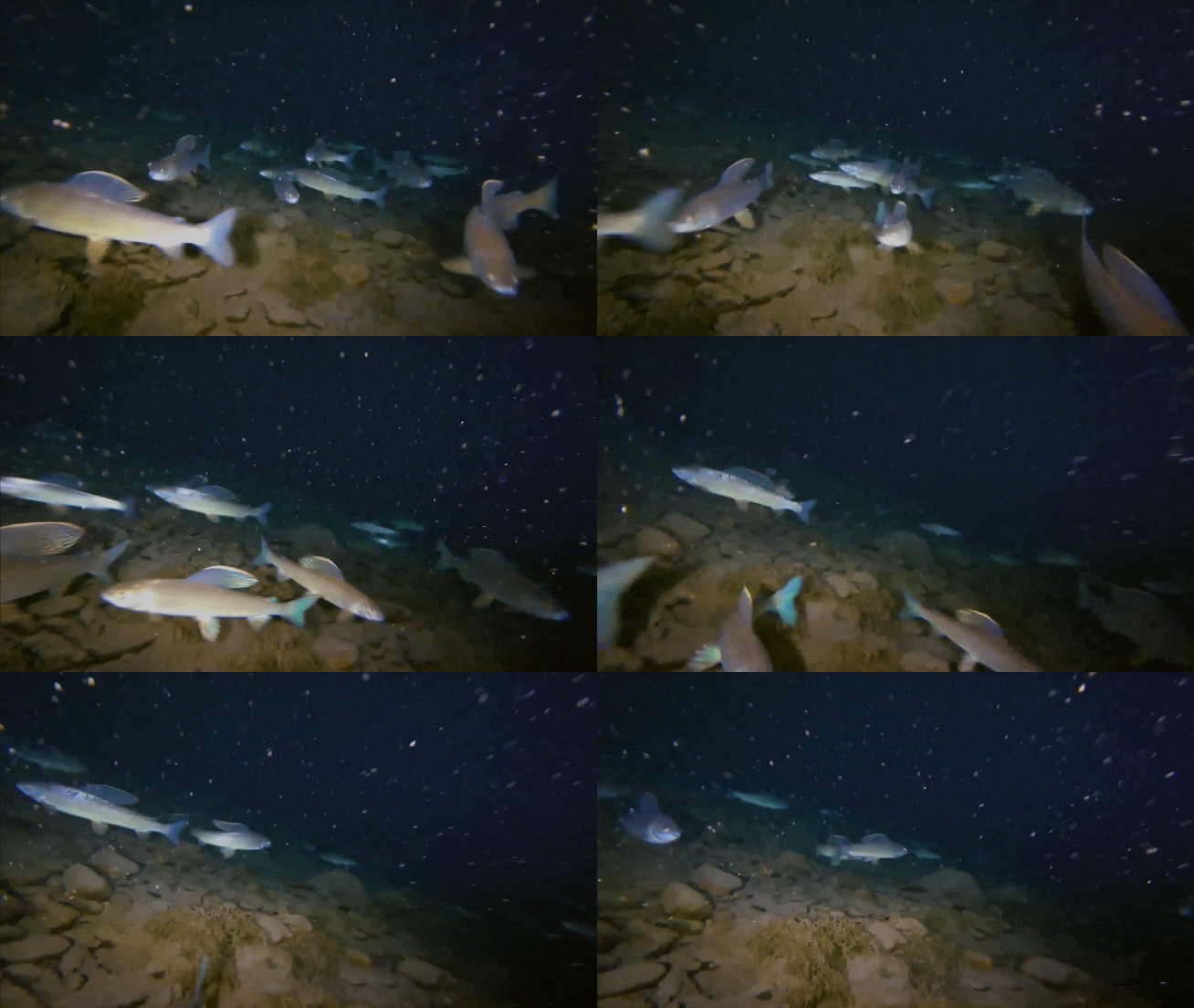
We deployed a Trident underwater ROV in the upwelling-fed pool to observe the species and number of fish present. Dozens of Arctic grayling were seen, but only one Dolly Varden. Several juvenile fish were observed. Finally, motion-capture and time lapse cameras were affixed to the streambank to record ice conditions and terrestrial scavenger activity throughout the winter.
Besides installation of equipment and water quality measurements at the Shaviovik Spring, we took the opportunity to track down and retrieve several nearby GPS collars that had been shed by wolverine, previously collared by WCS. Retrieval of the collars allows for the download of higher-resolution location data, as well as accelerometry and light data that will give more insight into the secret lives of North Slope wolverines.
Stay tuned for updates on this project from the upcoming April 2023 leg of fieldwork
 Arctic Beringia Fish Ecology
Leave a comment